
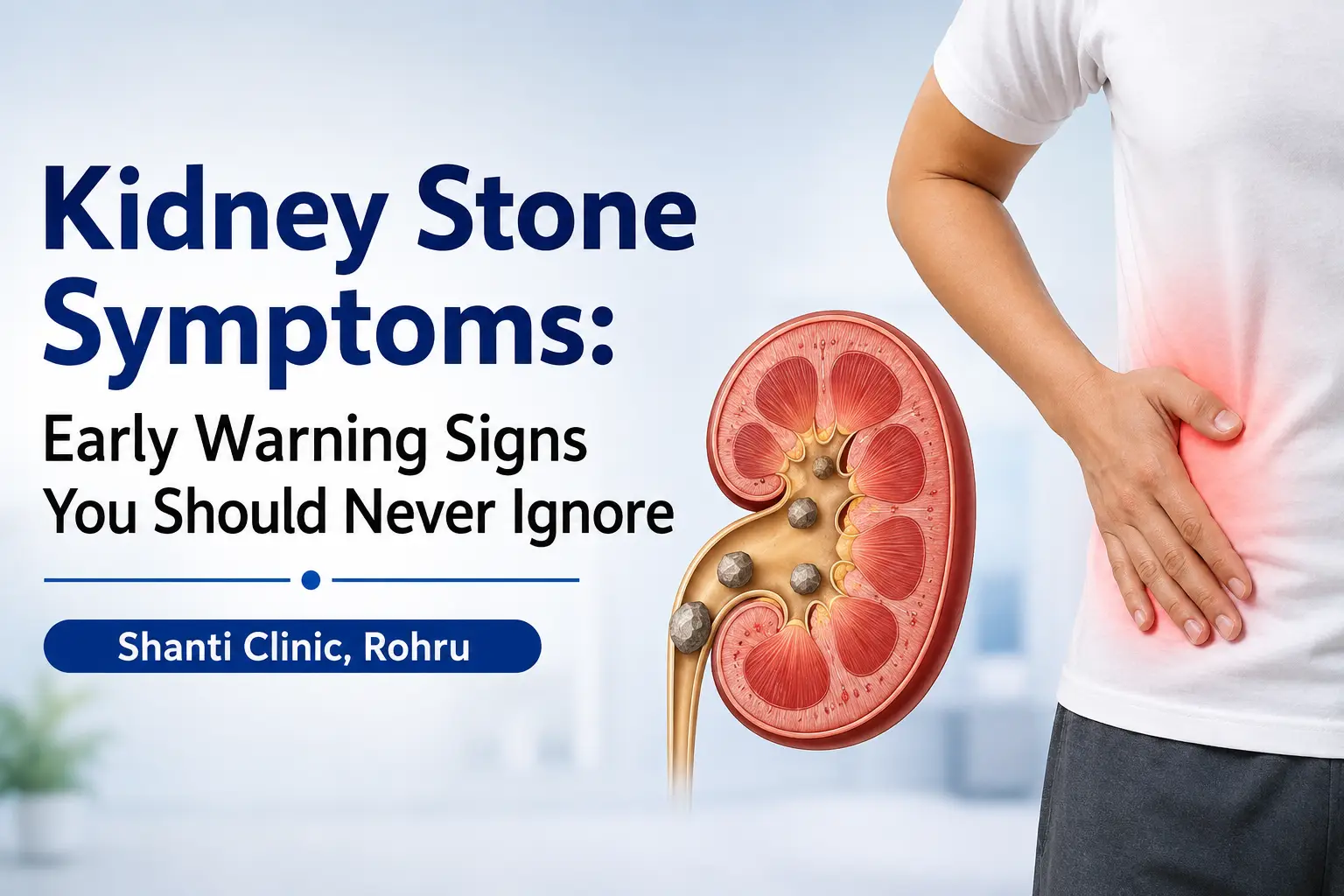
Kidney stones are one of the most common — and most painful — urological problems people experience today. What often starts as a dull ache in the back can, within hours, turn into one of the sharpest pains a person will ever feel. The tricky part is that many people ignore the early kidney stone symptoms, mistaking them for a pulled muscle, gas, or a routine urinary infection, until the pain becomes unbearable.
At Shanti Clinic & Nursing Home, Rohru, we see patients every week who wish they had recognized the warning signs sooner. This guide walks you through every major symptom of kidney stones, why they occur, how they are diagnosed, and what modern treatment options — including advanced laser lithotripsy — can do to get you pain-free again.
What Are Kidney Stones?
Kidney stones are hard deposits made of minerals and salts that form inside the kidneys. They develop when urine becomes concentrated, allowing minerals such as calcium, oxalate, and uric acid to crystallize and stick together. Over time, these crystals can grow into stones ranging from the size of a grain of sand to as large as a golf ball.
Small stones may pass through the urinary tract without causing much trouble. Larger stones, however, can get stuck in the ureter — the tube connecting the kidney to the bladder — blocking the flow of urine and triggering severe pain and complications.
Common Kidney Stone Symptoms
Recognizing kidney stone symptoms early can make the difference between a simple outpatient procedure and a medical emergency. Here are the signs to watch for:
1. Severe Pain in the Back or Side
The most classic of all kidney stone symptoms is a sharp, cramping pain that starts in the back or side, just below the ribs. This pain, often called “renal colic,” can radiate to the lower abdomen and groin as the stone moves through the urinary tract. Unlike muscular pain, this discomfort tends to come in waves, intensifying and easing in cycles.
2. Pain During Urination
A burning or stinging sensation while urinating is another common symptom, especially once the stone has moved closer to the bladder. This is frequently mistaken for a urinary tract infection (UTI), which is why proper diagnosis is essential.
3. Blood in the Urine (Hematuria)
Pink, red, or brown-tinted urine is a red flag that should never be ignored. As the stone scrapes against the walls of the urinary tract, it can cause minor bleeding, resulting in visibly discolored urine or blood detectable only under laboratory testing.
4. Frequent Urge to Urinate
Many patients notice they need to urinate more often than usual, sometimes passing only small amounts each time. This happens when a stone irritates the bladder or partially blocks urine flow.
5. Cloudy or Foul-Smelling Urine
Cloudy urine with an unusual odor can indicate the presence of a stone, especially if there is an accompanying infection.
6. Nausea and Vomiting
The intense pain from a kidney stone can trigger the body’s nervous system response, leading to nausea and vomiting. This is one of the reasons kidney stone pain is often confused with appendicitis or gallbladder problems.
7. Fever and Chills
If a kidney stone is accompanied by fever and chills, it may signal an infection in the urinary tract or kidney — a situation that requires urgent medical attention.
8. Difficulty Passing Urine
In some cases, a stone can completely block the flow of urine, causing painful straining or an inability to urinate at all. This is a medical emergency that needs immediate treatment.
9. Persistent Lower Abdominal or Groin Pain
As a stone travels down toward the bladder, pain often shifts from the back to the lower abdomen and groin, a pattern doctors use to help estimate the stone’s position.
Why Recognizing Symptoms Early Matters
Ignoring kidney stone symptoms can lead to complications such as:
- Kidney infections that may spread to the bloodstream
- Permanent kidney damage from prolonged blockage
- Repeated emergency room visits due to unmanaged pain
- Larger stones that are harder to treat non-invasively
Early diagnosis allows doctors to choose gentler, faster treatment options, such as medication for small stones or minimally invasive laser lithotripsy for larger ones — rather than more complex surgical intervention.
What Causes Kidney Stones?
Understanding the causes helps you recognize risk factors and prevent recurrence:
- Dehydration: Low fluid intake concentrates urine, encouraging crystal formation.
- Diet high in sodium, oxalates, or animal protein: Excess salt and certain foods increase mineral buildup.
- Family history: Genetics play a significant role in stone recurrence.
- Obesity and metabolic conditions: These can alter urine chemistry.
- Certain medications and supplements: Some calcium and vitamin C supplements may raise stone risk in susceptible individuals.
- Digestive diseases and surgeries: Conditions affecting nutrient absorption can increase stone-forming substances in urine.
According to the Mayo Clinic, kidney stones often have no single, definite cause, but a combination of factors usually contributes to their formation — which is why individualized diagnosis and treatment are so important.
How Kidney Stones Are Diagnosed
At Shanti Clinic, diagnosis typically involves:
- Physical examination and medical history review
- Urine tests to check for blood, infection, or crystal-forming minerals
- Blood tests to assess kidney function and mineral levels
- Ultrasound imaging (USG) to detect the size, number, and location of stones
- Digital X-ray for additional clarity when required
Our USG-guided approach helps our specialists pinpoint the exact size and position of a stone before recommending the right treatment path — avoiding unnecessary procedures.
Treatment Options at Shanti Clinic, Rohru
Not every kidney stone needs surgery. Depending on the size, location, and symptoms, treatment may include:
Conservative Management
For small stones (usually under 4-5mm), doctors often recommend increased fluid intake, pain relief medication, and monitoring, allowing the stone to pass naturally.
Medication Therapy
Certain medications can relax the ureter muscles, helping stones pass more easily and with less pain.
Laser Lithotripsy
For larger or stubborn stones, laser lithotripsy is one of the most advanced and effective treatments available today. This minimally invasive procedure uses focused laser energy to break stones into tiny fragments that the body can pass naturally, offering:
- Minimal discomfort
- Shorter hospital stay
- Faster recovery time
- High success rates with fewer complications
You can read our detailed breakdown of the procedure in our blog, How Lithotripsy Works: A Complete Guide to Painless Kidney Stone Treatment.
USG-Guided Lithotripsy
Combining ultrasound imaging with lithotripsy allows our specialists to target stones with precision, reducing risk and improving patient comfort throughout the procedure.
If stones have also formed in the bladder, our team offers dedicated care detailed in our guide on Bladder Stone Treatment in Rohru.
Tips to Prevent Kidney Stones
While not every stone can be prevented, these habits significantly reduce your risk:
- Drink plenty of water — aim for at least 2.5 to 3 liters daily, more in hot weather or after exercise.
- Limit sodium intake — reduce processed and salty foods.
- Moderate animal protein consumption — too much red meat can increase uric acid levels.
- Get enough dietary calcium from food sources, rather than avoiding it altogether.
- Reduce oxalate-rich foods if you’re prone to calcium oxalate stones (spinach, nuts, chocolate).
- Maintain a healthy weight through balanced diet and regular activity.
- Don’t ignore recurring UTIs — treat infections promptly to avoid stone-related complications.
When to See a Doctor
You should seek medical attention immediately if you experience:
- Severe pain that doesn’t subside
- Blood in your urine
- Fever combined with back or side pain
- Nausea or vomiting alongside urinary pain
- Difficulty or inability to urinate
If you’re searching for expert care, our detailed guide on finding the right specialist — Kidney Stone Doctor Near Me: Why Shanti Clinic, Rohru Is the Right Choice — can help you understand what to look for in a trusted urology provider.
Why Choose Shanti Clinic & Nursing Home, Rohru?
Shanti Clinic & Nursing Home is a trusted multi-specialty nursing home in Rohru, known for its advanced laser lithotripsy services and compassionate, patient-first approach. Here’s what sets us apart:
- Experienced specialists, including Dr. Roohail Sharma, dedicated to accurate diagnosis and effective treatment
- Modern diagnostic facilities, including USG imaging and digital X-ray
- Advanced laser lithotripsy for safe, minimally invasive stone removal
- Personalized, patient-centered care from consultation through recovery
- Comprehensive inpatient and outpatient services under one roof
Our patients consistently share how quickly they returned to normal life after treatment. As one of our patients, Rajesh Sharma, shared after his laser lithotripsy procedure: he was suffering from severe kidney stone pain for months before finding relief through our care and recovering faster than expected.
To learn more about our team and facilities, visit our About Us page, or explore all our services on the Services page.
Frequently Asked Questions (FAQs)
1. What are the earliest kidney stone symptoms?
The earliest signs often include mild back or side pain, a frequent urge to urinate, and slightly cloudy urine. These symptoms can worsen quickly as the stone moves through the urinary tract.
2. Can kidney stones cause pain without blood in the urine?
Yes. While blood in the urine is a common symptom, not every kidney stone causes visible bleeding. Some patients experience severe pain with no noticeable blood, while others have blood detectable only through lab testing.
3. How long do kidney stone symptoms last?
Symptoms can last anywhere from a few hours to several weeks, depending on the size of the stone and whether it passes naturally or requires medical intervention like laser lithotripsy.
4. Are kidney stone symptoms the same in men and women?
The core symptoms — pain, urinary changes, nausea — are similar in both men and women. However, pain location can sometimes be mistaken for other conditions, such as appendicitis in men or gynecological issues in women, making accurate diagnosis essential.
5. Is laser lithotripsy painful?
Laser lithotripsy is a minimally invasive procedure performed under appropriate anesthesia, so patients typically experience little to no pain during the procedure, with only mild discomfort during recovery.
6. Can kidney stones come back after treatment?
Yes, kidney stones can recur, especially without lifestyle changes like adequate hydration and a balanced diet. Regular follow-ups at Shanti Clinic help monitor and reduce recurrence risk.
7. When should I visit a doctor for kidney stone symptoms?
If you experience severe pain, fever, blood in urine, or difficulty urinating, seek medical attention immediately. Even mild but persistent symptoms should be evaluated to prevent complications.
Conclusion
Kidney stones can range from a minor inconvenience to a severe medical emergency, and the difference often comes down to how early the symptoms are recognized. Persistent back pain, burning urination, blood in the urine, nausea, and fever are all signs your body may be sending you a warning. Don’t wait for the pain to become unbearable — early diagnosis leads to simpler, faster, and less invasive treatment.
At Shanti Clinic & Nursing Home, Rohru, our team combines modern diagnostic technology with advanced laser lithotripsy and genuine, compassionate care to help you get back to a pain-free life as quickly as possible. If you’re experiencing any of the kidney stone symptoms discussed above, don’t delay — book your appointment today and take the first step toward lasting relief.