If you have ever heard someone describe kidney stone pain as “one of the worst pains a human being can experience,” you are not hearing an exaggeration. Doctors often place it in the same category as childbirth and severe trauma. Yet many people who feel a strange ache in their side or back have no idea what is actually happening inside their body until the pain becomes unbearable.
Understanding exactly what kidney stone pain feels like — where it starts, how it spreads, and how it changes over hours or days — can help you recognize the problem early and get treatment before it turns into a medical emergency. At Shanti Clinic & Nursing Home in Rohru, we see patients every week who describe this pain in strikingly similar ways. This guide walks through exactly what to expect, why the pain behaves the way it does, and what you should do about it.
Where Kidney Stone Pain Usually Starts
Kidney stones form when minerals and salts in urine crystallize into hard deposits inside the kidney. As long as a stone stays put inside the kidney and does not block urine flow, it may cause no pain at all. Many small stones are discovered completely by accident during a routine scan.
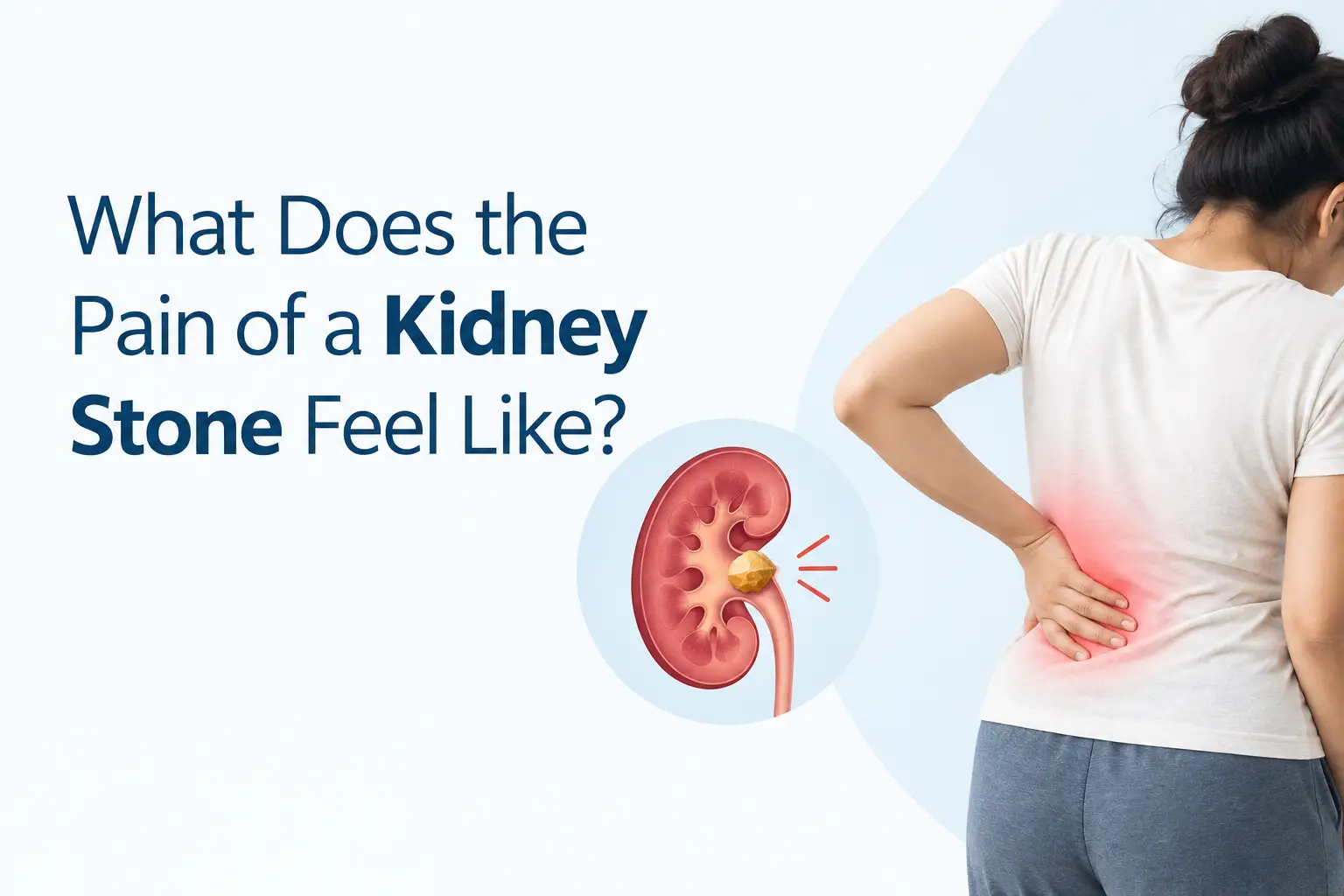
The pain begins the moment a stone starts moving out of the kidney and into the ureter — the narrow tube that carries urine from the kidney to the bladder. Because the ureter is only a few millimeters wide, even a small stone can get lodged and block the flow of urine. This blockage causes urine to back up and the kidney to swell, which is what triggers the intense pain known medically as renal colic.
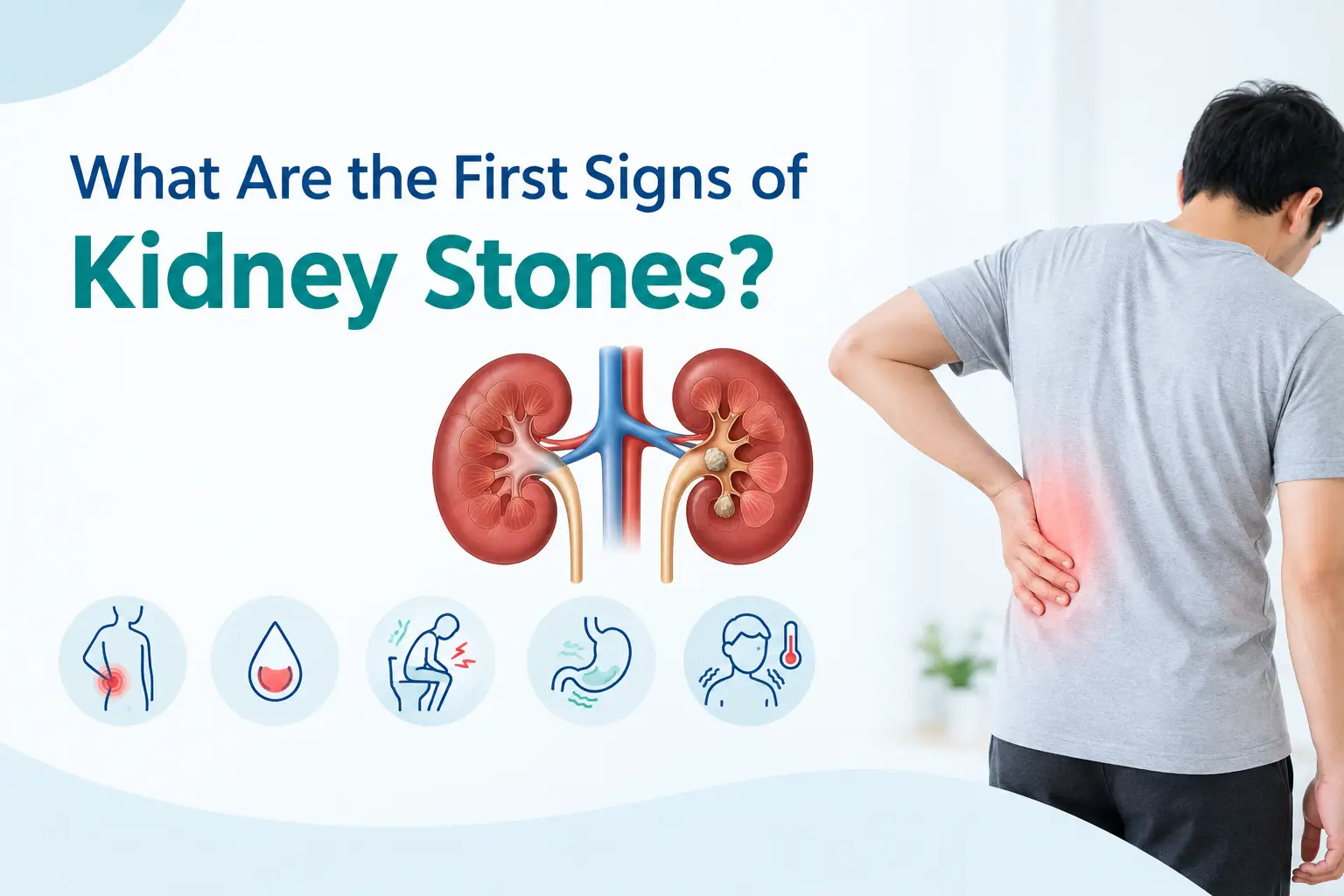
Most people first feel this pain in the flank — the area between the lower ribs and the hip, on one side of the back. It is important to note that the pain is almost always on one side, not both, since stones typically form and move through one kidney at a time. If you would like to understand the earliest warning signs before the pain fully develops, our article on the first signs of kidney stones is a helpful place to start.
What the Pain Actually Feels Like
Patients describe kidney stone pain in remarkably consistent ways, even though every person’s threshold and experience is different. Here is what it commonly feels like:
1. A Deep, Sharp, Stabbing Ache
Unlike a dull muscular backache, kidney stone pain is often described as sharp, stabbing, and deep — as though something inside is being twisted or squeezed. It does not feel like it is coming from the skin or muscles; it feels internal and severe.
2. Pain That Comes in Waves
One of the most distinctive features of kidney stone pain is that it is colicky — meaning it rises to an excruciating peak, holds for several minutes, and then eases slightly before building up again. These waves can occur every few minutes and are caused by the ureter’s muscles contracting and spasming as they try to push the stone forward.
3. Pain That Moves and Changes Location
As the stone travels down the ureter, the pain often migrates with it:
- High in the flank or back — when the stone is still near the kidney
- Side of the abdomen — as it moves further down the ureter
- Groin, lower abdomen, or genitals — as the stone nears the bladder
This shifting pattern is a strong clue for doctors trying to estimate how far the stone has traveled without even ordering a scan.
4. Sudden Onset, Often at Night
Many patients say the pain came on suddenly, often waking them from sleep, with no clear injury or trigger. This sudden, unprovoked nature is very different from typical back pain caused by lifting or poor posture.
5. No Position Brings Relief
With most causes of back pain, lying down, stretching, or changing position offers at least some relief. Kidney stone pain is notorious for offering none. Patients often describe pacing, rocking, or writhing because no position feels better — a detail doctors specifically ask about, since it helps distinguish renal colic from musculoskeletal pain.
How Intense Is the Pain, Really?
On a standard 1-to-10 pain scale, kidney stone pain frequently ranks between 7 and 10, especially when a stone is actively obstructing the ureter. For comparison, many women who have experienced both childbirth and a kidney stone say the stone pain felt just as intense, if not more so, because it arrives without warning and without the ability to “prepare” for it mentally.
The size of the stone does not always determine the intensity. A very small stone stuck at a narrow point in the ureter can cause pain just as severe as a much larger one, because the pain comes from the blockage and spasm — not from the stone scraping tissue.
Symptoms That Often Accompany the Pain
Kidney stone pain rarely travels alone. Watch for these accompanying symptoms, which strengthen the case for a stone rather than a muscular issue:
- Blood in the urine (pink, red, or brown tinge)
- A burning sensation while urinating
- A frequent or urgent need to urinate, even when little comes out
- Nausea and vomiting
- Cloudy or foul-smelling urine
- Fever and chills, if an infection has developed alongside the stone
- Restlessness — an inability to sit still or find a comfortable position
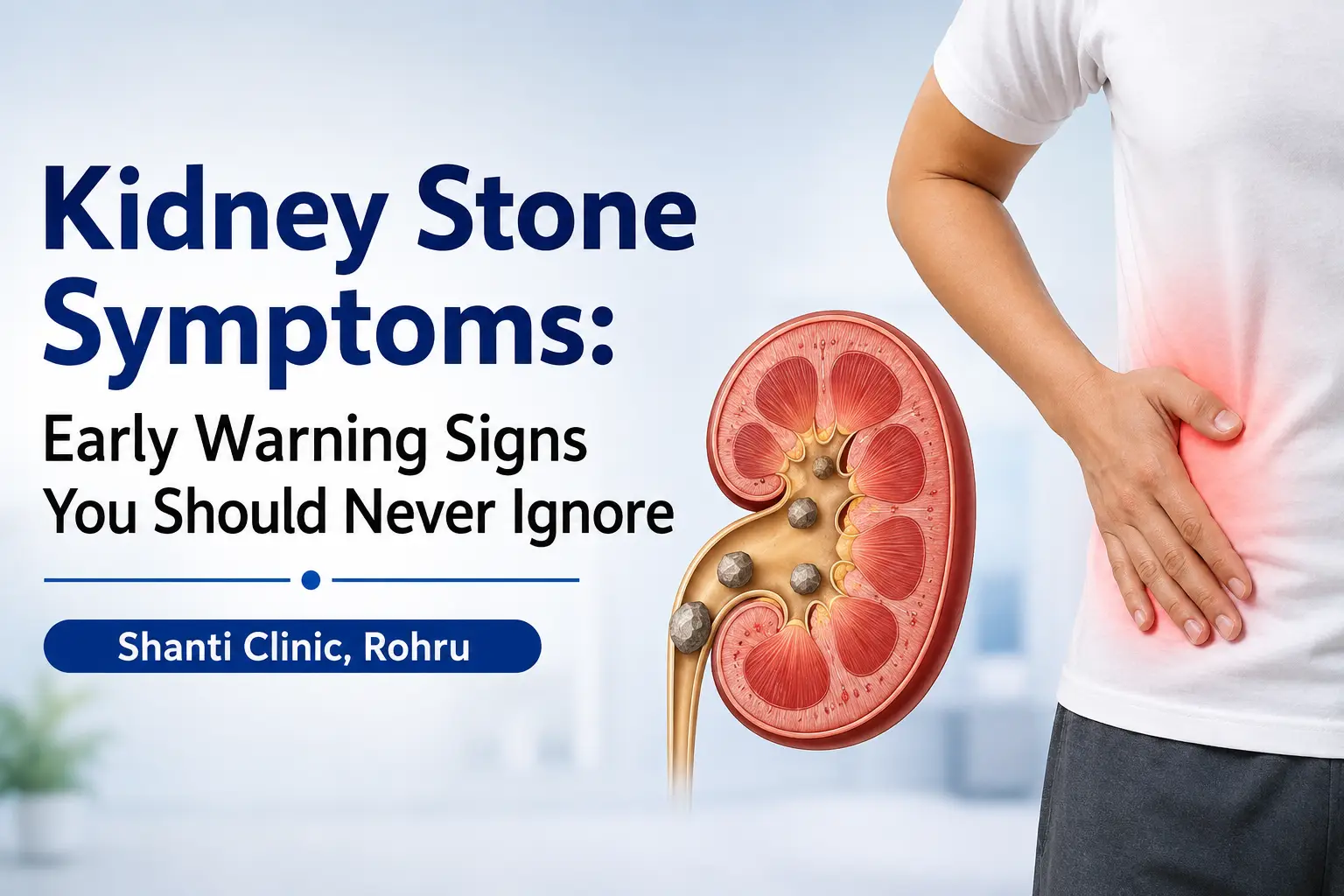
For a more detailed breakdown of these symptoms and what they might mean, see our full guide on kidney stone symptoms.
Why the Pain Behaves This Way: A Quick Look at the Cause
To understand the pain, it helps to understand what is physically happening:
- A stone forms in the kidney from crystallized minerals like calcium oxalate, uric acid, or struvite.
- The stone dislodges and enters the ureter.
- The ureter narrows at certain points, and the stone gets stuck.
- Urine backs up behind the blockage, causing the kidney to swell (a condition called hydronephrosis).
- The ureter spasms as it tries to push the stone through, producing the wave-like colicky pain.
- As the stone shifts position — even slightly — the pain location and intensity change accordingly.
This is also why pain can suddenly stop: once the stone either passes into the bladder or moves to a wider section of the ureter, the pressure is briefly relieved.
When Kidney Stone Pain Becomes a Medical Emergency
While kidney stone pain is almost always distressing, certain signs mean you should seek emergency care immediately rather than waiting it out at home:
- High fever (above 101°F / 38.3°C) with chills, which may indicate a kidney infection
- Persistent vomiting that prevents you from keeping fluids down
- Inability to urinate at all
- Pain so severe you cannot sit still, walk, or find any relief
- Visible blood clots in the urine
These symptoms can point to a urinary tract infection combined with obstruction, a condition that can become serious quickly if untreated. If you are in or around Rohru and experiencing these symptoms, do not wait — you can review options for a kidney stone doctor near you or head straight to our facility.
How Doctors Diagnose the Cause of Your Pain
When a patient arrives describing this kind of pain, doctors at Shanti Clinic typically follow a quick, structured process:
- Physical examination to check for tenderness in the flank or abdomen
- Urine test to check for blood, signs of infection, or crystals
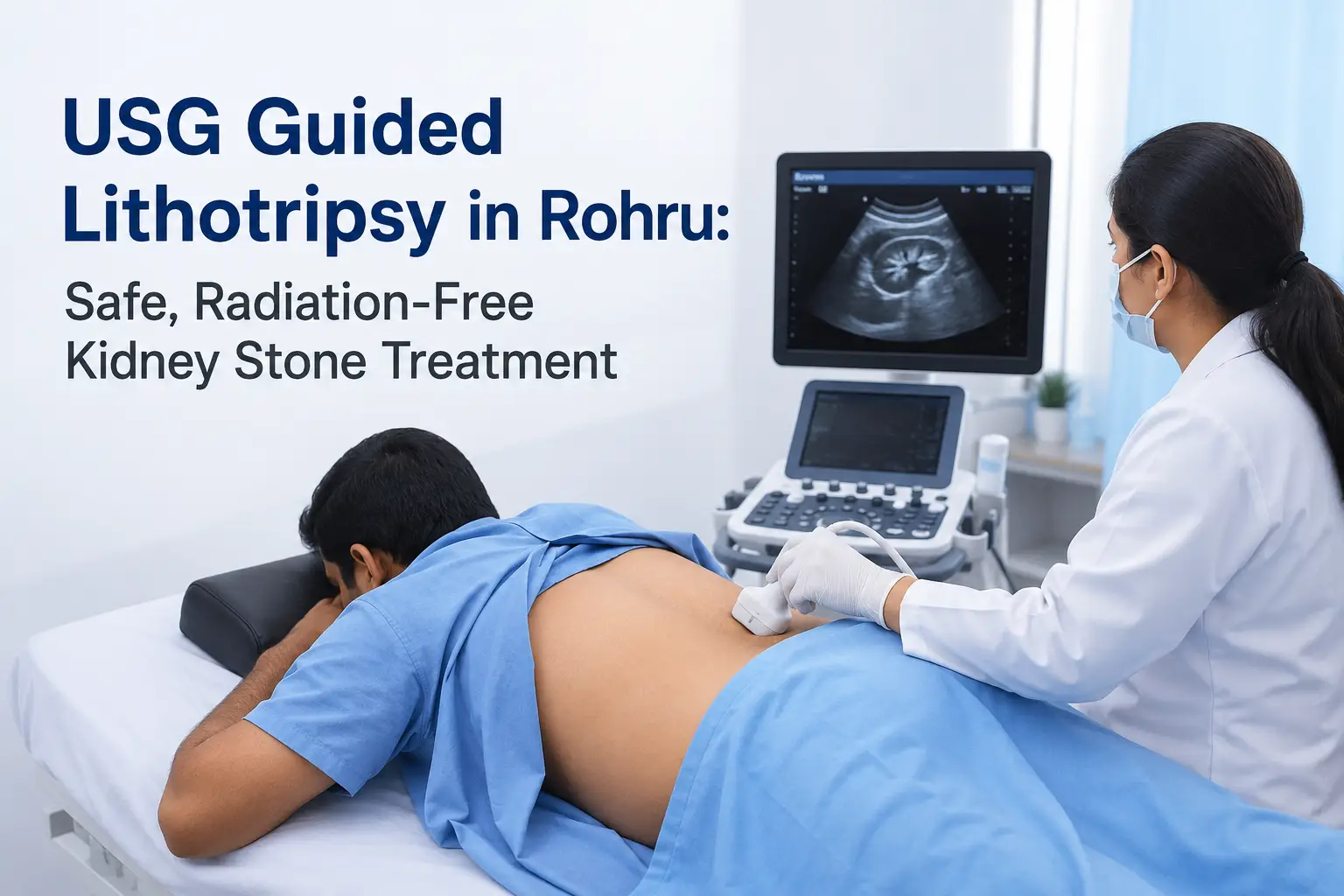
- Ultrasound (USG) to detect stones and measure kidney swelling — a safe, radiation-free first step
- X-ray or CT scan, when needed, to pinpoint the stone’s exact size and location
Because Rohru is a hill region where access to advanced diagnostics can be limited, Shanti Clinic offers on-site ultrasound and digital X-ray services so patients don’t need to travel long distances just to get an accurate diagnosis.
Treatment Options Once a Stone Is Confirmed
The right treatment depends on the stone’s size, location, and whether it is likely to pass on its own.
- Small stones (under 4–5mm) often pass naturally with hydration, pain management, and medication that relaxes the ureter.
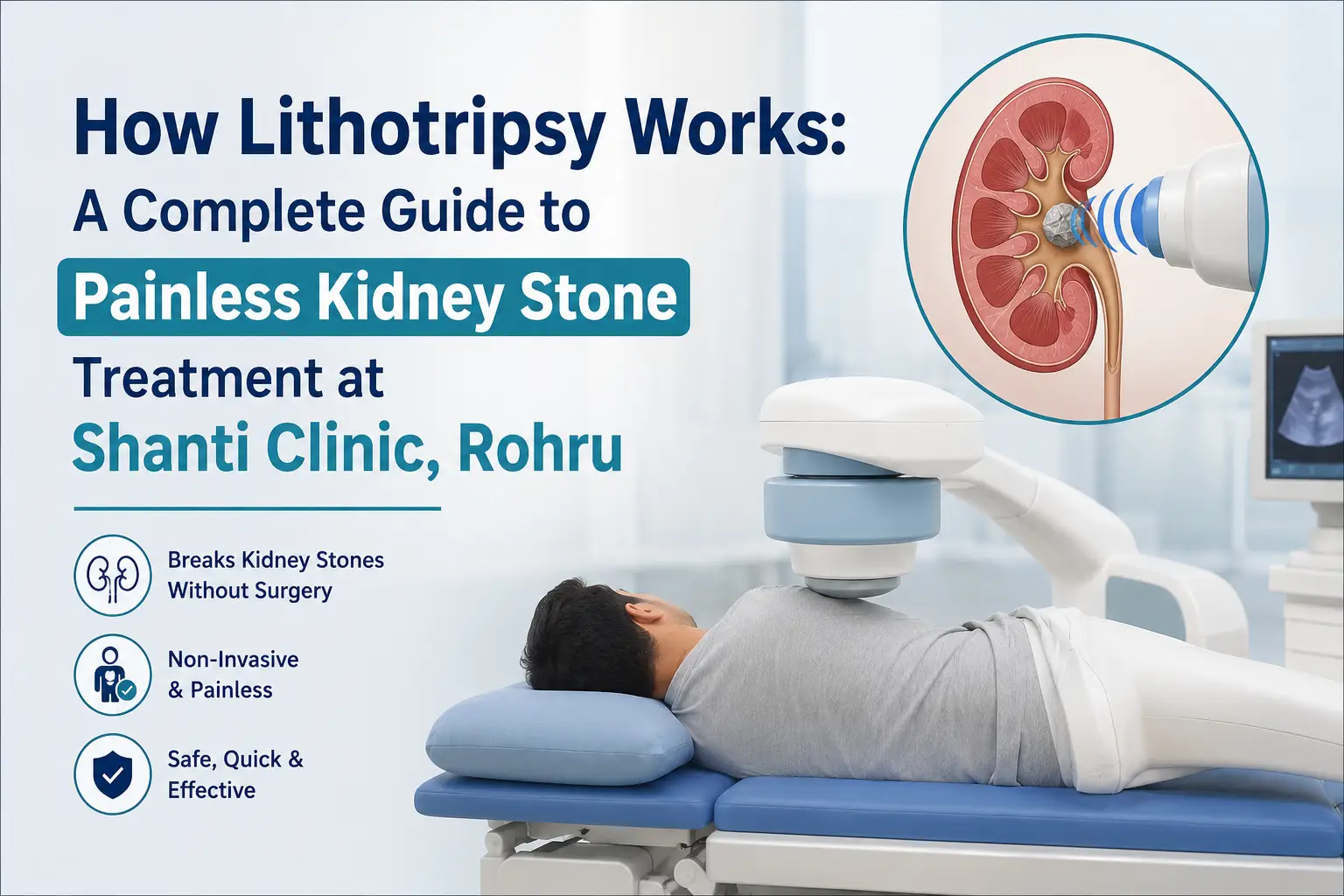
- Larger or stuck stones may require intervention such as lithotripsy, which uses shock waves to break the stone into smaller, passable fragments. You can read more about how lithotripsy works and how it compares to surgery in our detailed guide on laser treatment for kidney stones.
- Non-surgical approaches are also available for many patients — see our article on kidney stone removal without surgery to understand who qualifies.
- For safer, radiation-free imaging throughout treatment, Shanti Clinic also offers USG-guided lithotripsy.
If cost is a concern, our guide on kidney stone treatment cost breaks down what typically affects pricing so you can plan ahead without surprises.
According to the National Institute of Diabetes and Digestive and Kidney Diseases (NIDDK), kidney stone pain typically results from the stone blocking urine flow and causing the kidney to swell, which matches exactly what patients in Rohru describe when they visit us.
Can You Prevent This Pain From Happening Again?
Once you have experienced kidney stone pain, you are statistically more likely to develop another stone in the future. The good news is that simple lifestyle changes can meaningfully lower that risk. Our detailed article on kidney stone prevention tips covers 12 doctor-recommended habits, including hydration targets, dietary adjustments, and warning signs to monitor going forward.
Frequently Asked Questions
1. Does kidney stone pain come and go, or is it constant?
It usually comes in waves. Pain rises to a peak, holds for several minutes, briefly eases, and then builds again as the ureter spasms around the stone. Some background ache may remain constant between the sharper waves.
2. Can kidney stone pain be mistaken for back pain?
Yes, especially in the early stages when the pain is limited to the flank. The key differences are that kidney stone pain does not improve with rest or position changes, tends to come in waves, and is usually accompanied by urinary symptoms like blood in the urine or a burning sensation.
3. Why does the pain move from my back to my groin?
The pain follows the stone’s path down the ureter. As the stone travels closer to the bladder, the nerve signals shift, making the pain feel like it has moved to the lower abdomen, groin, or genitals.
4. How long does kidney stone pain usually last?
This depends on the stone’s size and position. Pain can last anywhere from a few hours to several days, with episodes of intense colic interspersed with periods of relative relief, especially if the stone shifts position.
5. Is it normal to feel nauseous during kidney stone pain?
Yes. Nausea and vomiting are extremely common because the nerves supplying the kidneys and ureters are closely connected to those supplying the stomach and intestines, so intense kidney pain often triggers digestive symptoms too.
6. When should I stop waiting it out and see a doctor?
If the pain is severe, accompanied by fever, persistent vomiting, or you are unable to urinate, seek medical attention immediately rather than waiting for the stone to pass on its own.
Conclusion
Kidney stone pain is unmistakable once you understand what to look for: a sudden, sharp, wave-like ache that starts in the back or side, often shifts toward the groin, offers no relief no matter how you move, and frequently comes with nausea, urinary changes, or fever. Recognizing this pattern early can make the difference between passing a small stone with simple home care and facing a painful emergency.
If you or a loved one in Rohru and the surrounding hill areas are experiencing this kind of pain, don’t wait for it to get worse. The team at Shanti Clinic & Nursing Home offers on-site diagnostics, ultrasound-guided treatment, and experienced urological care to get you real relief quickly. Book an appointment today and let us help you find out exactly what’s causing your pain — and the fastest way to treat it.