
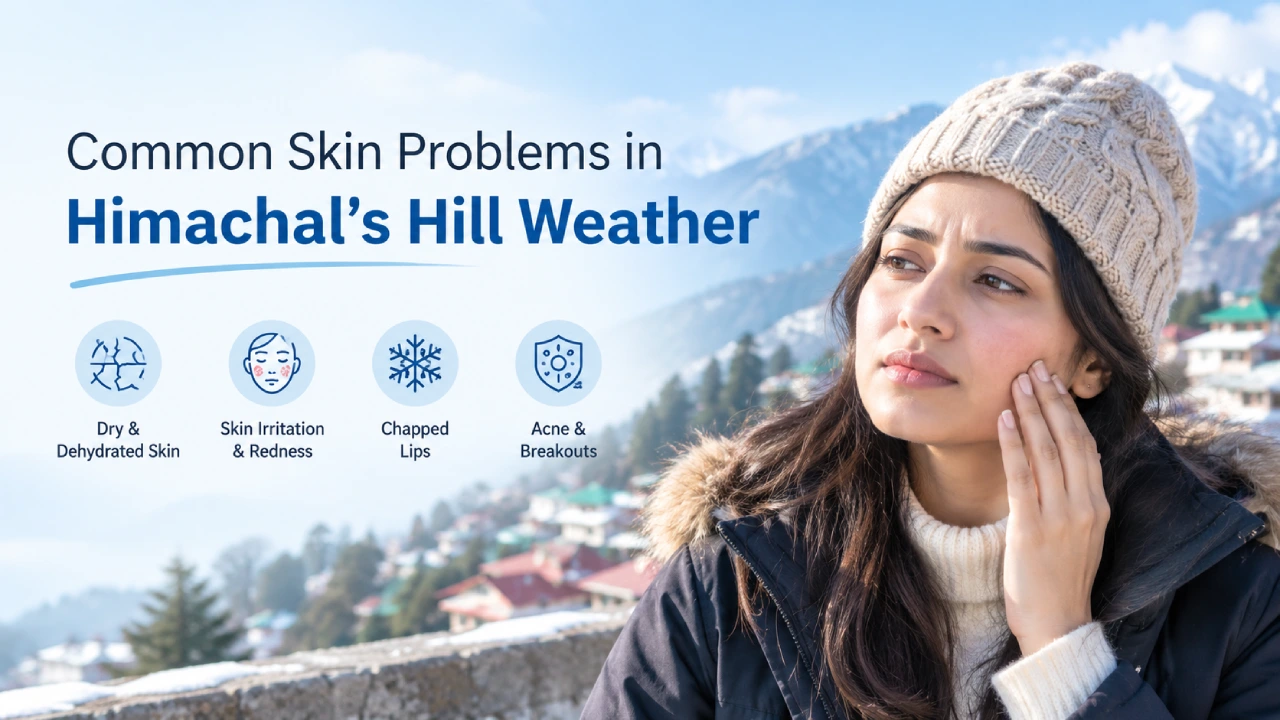
Living in a hill region like Rohru or elsewhere in Himachal Pradesh comes with a unique set of skin challenges that people in warmer, plain areas simply don’t deal with. Cold, dry air, big temperature swings between day and night, and long winters all take a toll on skin health. Here’s what causes the most common hill-weather skin problems, how to manage them at home, and when it’s time to see a dermatologist.
Why Hill Weather Affects Skin Differently
Himachal’s climate is different from the plains in a few specific ways that directly impact skin:
Lower humidity, especially in winter
Cold mountain air holds far less moisture than warmer regions. This constantly pulls moisture out of your skin, leading to dryness that’s more persistent than typical seasonal dryness elsewhere.
Sharp temperature swings
Moving between cold outdoor air and heated indoor spaces (or unheated hill homes with wood fires) repeatedly stresses the skin barrier, making it harder for skin to retain natural oils and moisture.
Higher UV exposure at altitude
Many people don’t realize that UV radiation is actually stronger at higher altitudes, since there’s less atmosphere to filter it. This means sun damage and related skin issues can be more pronounced in hill regions, even in cooler weather.
Prolonged winters
Longer cold seasons mean skin spends more months of the year dealing with dryness and irritation compared to areas with shorter winters.
Dry Skin Problems in Winter
This is the most common complaint in hill regions during colder months. Cold air combined with indoor heating (or fires) strips natural oils from the skin, leading to:
- Rough, flaky patches, especially on hands, arms, and legs
- Tightness or a “stretched” feeling after washing
- Cracked skin on heels, fingertips, or knuckles in severe cases
- Increased itching, particularly at night
Untreated, severely dry skin can crack deeply enough to become painful or even prone to minor infections.
Skin Allergy Causes and Treatment
Allergic reactions tend to flare up more in hill weather due to a combination of factors: dry skin is more reactive to irritants, wood smoke from indoor fires can trigger reactions, and seasonal plant pollen varies by altitude and region. Common signs of a skin allergy include:
- Red, itchy patches that appear suddenly
- Small bumps or hives
- Swelling in localized areas
- Reaction after exposure to new soaps, wool clothing, or smoke
Identifying the specific trigger — whether it’s a fabric, product, or environmental factor — is key to managing allergic skin reactions long-term, rather than just treating symptoms repeatedly.
Common Skin Infections in Monsoon
While winter brings dryness, Himachal’s monsoon season brings a different set of skin concerns. Increased humidity and moisture create ideal conditions for:
- Fungal infections, particularly in skin folds (underarms, groin, between toes)
- Bacterial infections from minor cuts or insect bites that don’t dry out properly
- Heat rash in humid, lower-altitude areas during warmer monsoon spells
Keeping skin dry, wearing breathable fabrics, and treating minor cuts promptly all help prevent monsoon-related skin infections from developing.
How to Treat Dry and Cracked Skin
For winter dryness specifically, these steps genuinely help:
Moisturize immediately after washing
Apply moisturizer within a few minutes of bathing or washing hands, while skin is still slightly damp — this locks in moisture far more effectively than applying it to fully dry skin.
Choose thicker, oil-based moisturizers in winter
Lighter lotions often aren’t enough for hill-region winter dryness. Look for cream or ointment-based moisturizers rather than thin, water-based lotions during colder months.
Avoid very hot water
Hot showers feel good in cold weather but strip natural oils faster than warm water, worsening dryness over time.
Protect skin from wind and cold directly
Covering exposed skin (hands, face) when outside in cold wind helps prevent the sharp moisture loss that direct cold exposure causes.
Treat cracked areas promptly
For cracked heels or knuckles, a thicker healing ointment applied consistently — not just occasionally — helps prevent cracks from deepening or becoming infected.
Stay hydrated internally too
Drinking enough water, even when you don’t feel as thirsty in cold weather, supports skin’s ability to retain moisture from the inside.
When to See a Dermatologist
Home care handles most mild, seasonal skin issues, but you should see a doctor if you notice:
- Cracks deep enough to bleed or that don’t heal within a week or two
- Signs of infection — increasing redness, warmth, swelling, or pus
- Allergic reactions that spread or worsen despite avoiding the suspected trigger
- Persistent itching that disrupts sleep or daily activity
- Skin changes that don’t resolve with consistent home care over several weeks
- Any unusual mole, spot, or lesion that changes in size, shape, or color
Ongoing skin issues shouldn’t be dismissed as “just the weather” — proper evaluation can catch underlying conditions like eczema, psoriasis, or fungal infections that need targeted treatment rather than general skin care.
How Shanti Clinic Can Help
If home care isn’t resolving your skin concerns, our skin care services in Rohru offer proper diagnosis and treatment for dry skin conditions, allergic reactions, and infections common to hill-region weather. For more specific concerns like acne scarring or pigmentation, our laser skin treatment service is also available — all without needing to travel to Shimla for dermatological care.
Frequently Asked Questions
1. Why is my skin drier in Himachal compared to the plains?
Lower humidity, colder air, and prolonged winters in hill regions pull moisture from skin more aggressively than in warmer, more humid plain areas.
2. Is sun protection necessary in cold hill weather?
Yes — UV radiation is actually stronger at higher altitudes due to thinner atmosphere, so sun protection matters even in cooler temperatures.
3. What’s the best moisturizer for winter skin in hill areas?
Thicker, cream or ointment-based moisturizers work better than light lotions for hill-region winter dryness, especially when applied right after washing.
4. Can indoor wood fires make skin problems worse?
Yes — smoke exposure can dry out and irritate skin, and sudden temperature changes between a warm fire and cold outdoor air can stress the skin barrier further.
5. How do I know if a skin issue is an allergy or an infection?
Allergies typically appear suddenly after exposure to a trigger and may include itching and hives, while infections often come with increasing redness, warmth, swelling, or pus. A doctor can confirm which you’re dealing with.
6. When should cracked heels or hands be treated by a doctor instead of home care?
If cracks are deep enough to bleed, aren’t improving within a week or two of consistent moisturizing, or show signs of infection, it’s time for a professional evaluation.