

Headaches are one of the most common health concerns affecting people of all ages. While occasional headaches are usually harmless, headaches that occur repeatedly or become more severe may indicate an underlying medical condition that requires attention. Understanding the reasons for constant headaches, recognizing the symptoms of headache, and identifying the foods that trigger migraine headaches can help you manage your condition effectively and seek treatment before it worsens.
At Shanti Clinic & Nursing Home, Rohru, our experienced medical team provides comprehensive diagnosis and personalized treatment for different types of headaches, including migraines, tension headaches, sinus headaches, and headaches caused by other medical conditions. Early diagnosis and proper treatment can significantly improve your quality of life.
Why Do Constant Headaches Occur?
A headache is not a disease itself but a symptom of another condition. Constant or frequent headaches may result from lifestyle habits, stress, medical conditions, or neurological disorders.
If you experience headaches several times a week or every day, it is important to consult a doctor to determine the exact cause.
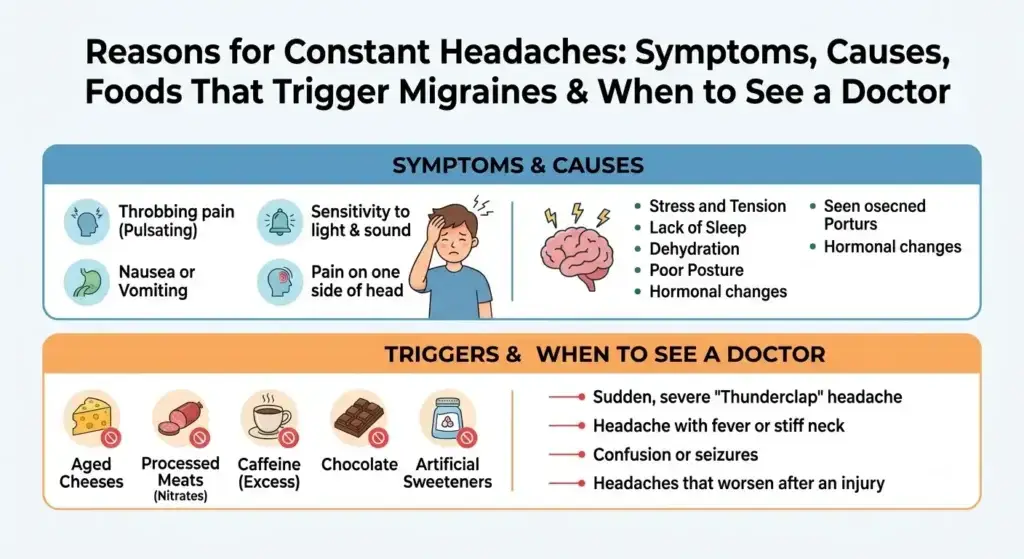
Common Reasons for Constant Headaches
1. Stress and Anxiety
One of the leading reasons for frequent headaches is chronic stress. Emotional stress causes muscle tension around the neck, shoulders, and scalp, leading to tension headaches.
Symptoms include:
- Tight pressure around the head
- Neck stiffness
- Pain behind the eyes
- Difficulty concentrating
Managing stress through exercise, adequate sleep, meditation, and relaxation techniques can reduce headache frequency.
2. Migraine
Migraines are severe neurological headaches that often affect one side of the head and may last from several hours to several days.
Common migraine symptoms include:
- Throbbing pain
- Sensitivity to light
- Sensitivity to sound
- Nausea
- Vomiting
- Blurred vision
Many people experience migraines due to hormonal changes, certain foods, lack of sleep, or stress.
3. Poor Sleep
Sleep deprivation is among the most common causes of regular headaches.
Poor sleep may result from:
- Irregular sleep schedule
- Sleep apnea
- Stress
- Excessive screen time before bed
Adults should aim for 7–9 hours of quality sleep each night.
4. Dehydration
Not drinking enough water can quickly lead to headaches because the brain temporarily contracts due to fluid loss.
Signs include:
- Dry mouth
- Fatigue
- Dizziness
- Reduced concentration
Drink sufficient water throughout the day, especially during hot weather.
5. High Blood Pressure
Uncontrolled blood pressure can sometimes cause persistent headaches, particularly if blood pressure rises suddenly.
Regular blood pressure monitoring is essential, especially for adults over 40 or those with a family history of hypertension.
6. Eye Strain
Spending long hours looking at computers, mobile phones, or reading without breaks can strain the eyes and trigger headaches.
Simple measures include:
- Following the 20-20-20 rule
- Wearing prescribed glasses
- Adjusting screen brightness
7. Sinus Infection
Blocked sinuses due to allergies or infections may cause headaches around the forehead, cheeks, and eyes.
Other symptoms include:
- Nasal congestion
- Fever
- Facial pressure
- Thick nasal discharge
8. Medication Overuse
Taking painkillers too frequently may actually increase headache frequency, a condition known as medication-overuse headache.
Always follow your doctor’s advice regarding medication use.
Symptoms of Headache You Should Never Ignore
While mild headaches usually resolve on their own, some symptoms require immediate medical attention.
Common symptoms of headache include:
- Persistent pain
- Throbbing sensation
- Pressure around the head
- Neck stiffness
- Nausea
- Vomiting
- Blurred vision
- Sensitivity to light
- Sensitivity to sound
- Dizziness
- Difficulty concentrating
Seek emergency medical care if you experience:
- Sudden, severe headache (“thunderclap” headache)
- Headache after a head injury
- Weakness or numbness
- Difficulty speaking
- Confusion
- Seizures
- High fever with stiff neck
- Vision loss
These symptoms may indicate serious conditions such as stroke, meningitis, or brain hemorrhage.
Foods That Trigger Migraine Headaches
Diet plays an important role in migraine management. While triggers vary from person to person, some foods are commonly associated with migraine attacks.
Common foods that trigger migraine headaches include:
- Aged cheese
- Chocolate
- Processed meats
- Foods containing monosodium glutamate (MSG)
- Artificial sweeteners
- Alcohol
- Excessive caffeine
- Energy drinks
- Fermented foods
- Pickled foods
Skipping meals or fasting can also trigger headaches in some people.
Keeping a food diary may help identify your personal triggers.
Foods That May Help Prevent Headaches
A balanced diet supports overall health and may reduce headache frequency.
Include:
- Fresh fruits
- Green leafy vegetables
- Whole grains
- Yogurt
- Fish rich in omega-3 fatty acids (if non-vegetarian)
- Plenty of water
Avoid excessive processed foods and sugary beverages.
Other Causes of Regular Headaches
Additional causes of regular headaches include:
- Hormonal changes
- Thyroid disorders
- Vitamin deficiencies
- Poor posture
- Neck muscle strain
- Ear infections
- Dental problems
- Chronic stress
- Depression
- Anxiety disorders
A detailed medical evaluation helps identify the exact cause.
Risk Factors
You may have a higher risk of frequent headaches if you:
- Have a family history of migraines
- Experience chronic stress
- Sleep poorly
- Are overweight
- Smoke
- Consume excessive alcohol
- Frequently skip meals
- Spend long hours using digital devices
How Doctors Diagnose Frequent Headaches
At Shanti Clinic & Nursing Home, the evaluation may include:
- Medical history
- Physical examination
- Blood pressure check
- Eye examination
- Blood tests (if needed)
- Neurological assessment
- Imaging tests such as CT scan or MRI when clinically indicated
The goal is to identify the underlying cause rather than simply treating the pain.
Treatment Options
Treatment depends on the cause and severity of your headaches.
Your doctor may recommend:
- Lifestyle modifications
- Prescription medications
- Migraine-specific medicines
- Blood pressure control
- Stress management
- Sleep improvement
- Dietary changes
- Treatment for sinus infections or other underlying conditions
Avoid self-medicating frequently without consulting a healthcare professional.
Tips to Prevent Frequent Headaches
Simple lifestyle changes can make a significant difference.
- Drink enough water.
- Get adequate sleep every night.
- Eat meals on time.
- Exercise regularly.
- Limit caffeine intake.
- Reduce stress through yoga or meditation.
- Take regular breaks from screens.
- Maintain good posture.
- Identify and avoid personal migraine triggers.
- Keep a headache diary to track symptoms and possible triggers.
Why Choose Shanti Clinic & Nursing Home?
At Shanti Clinic & Nursing Home, Rohru, we are committed to providing patient-centered care with accurate diagnosis and personalized treatment plans.
Our clinic offers:
- Experienced medical professionals
- Comprehensive health evaluations
- Modern diagnostic facilities
- Personalized treatment plans
- Preventive healthcare guidance
- Compassionate patient care
Whether your headaches are occasional or persistent, our team works to identify the root cause and provide effective treatment.
Frequently Asked Questions
What are the most common reasons for constant headaches?
Stress, migraines, dehydration, poor sleep, sinus infections, eye strain, and high blood pressure are among the most common causes.
When should I see a doctor for frequent headaches?
You should seek medical advice if headaches occur several times a week, become more severe, interfere with daily life, or are accompanied by fever, weakness, confusion, or vision changes.
Can certain foods trigger migraine headaches?
Yes. Chocolate, aged cheese, processed meats, alcohol, foods containing MSG, and excessive caffeine are common migraine triggers.
Can dehydration cause headaches?
Yes. Even mild dehydration can lead to headaches, fatigue, and dizziness. Drinking enough water throughout the day can help prevent dehydration-related headaches.
Are migraines hereditary?
Migraines often run in families, suggesting that genetics may increase the risk in some individuals.
Conclusion
Frequent headaches should never be ignored. Understanding the reasons for constant headaches, recognizing the symptoms of headache, identifying the foods that trigger migraine headaches, and addressing the causes of regular headaches can help prevent complications and improve your quality of life.
If you experience recurring headaches, persistent migraines, or unexplained head pain, seek professional medical evaluation rather than relying on over-the-counter pain medications. Early diagnosis allows doctors to identify the underlying cause and recommend the most appropriate treatment.
Book your consultation with Shanti Clinic & Nursing Home, Rohru, today to receive expert care for headaches and other general health concerns.
Medical Disclaimer
This article is intended for educational purposes only and should not replace professional medical advice, diagnosis, or treatment. Always consult a qualified healthcare provider regarding any persistent or severe headache symptoms.