
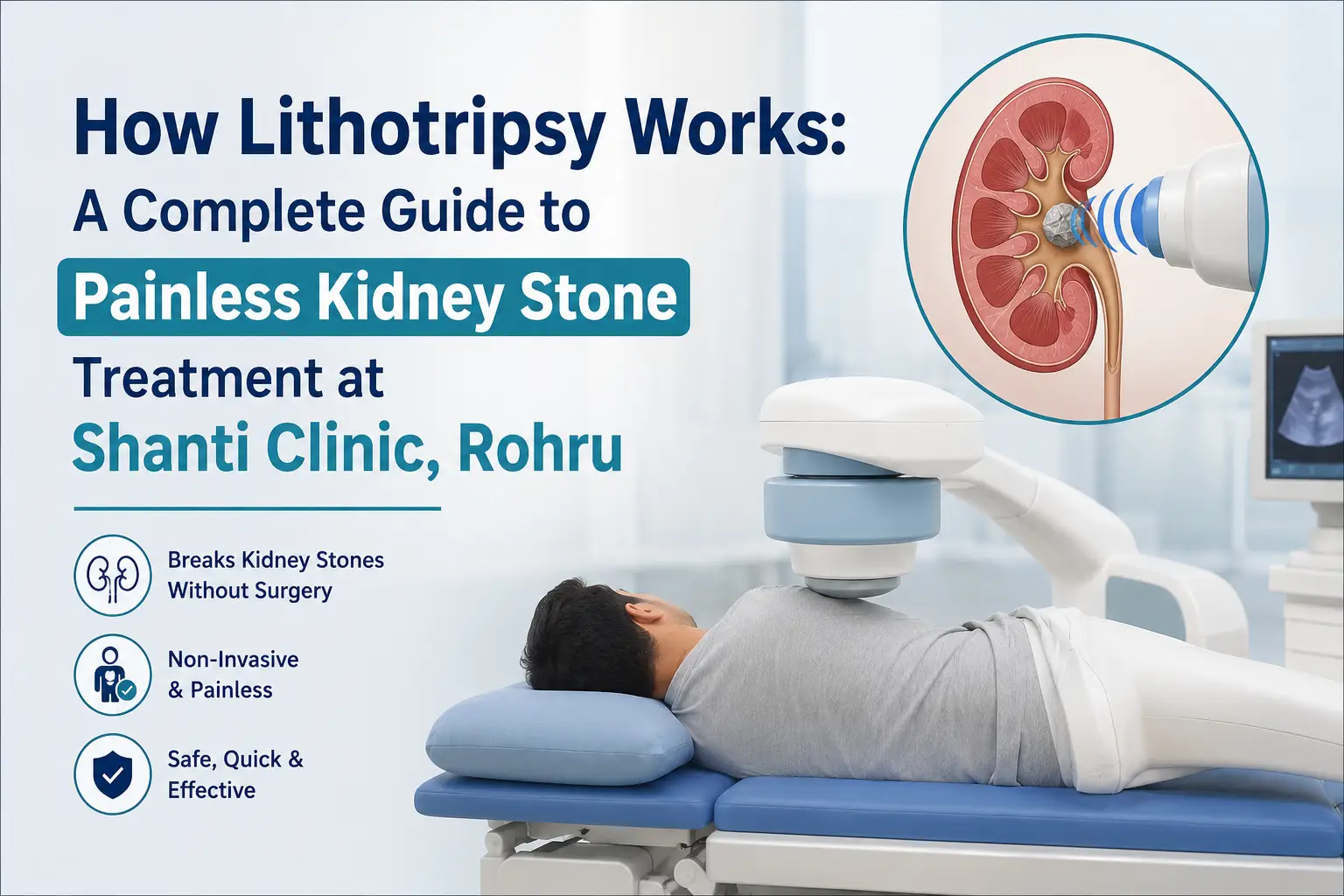
Kidney stones are one of the most painful conditions a person can experience — sudden, sharp pain in the back or side, burning urination, and nausea that can disrupt daily life within hours. Fortunately, patients no longer have to rely on major surgery to get relief. At Shanti Clinic & Nursing Home, Rohru, advanced laser lithotripsy offers a safe, minimally invasive way to break down and remove kidney and bladder stones with minimal discomfort and faster recovery.
What Is Lithotripsy?
Lithotripsy is a medical procedure used to break large kidney or bladder stones into smaller, sand-like fragments that the body can pass naturally through urine. Unlike traditional open surgery, lithotripsy does not require large incisions, which means less pain, a shorter hospital stay, and a quicker return to normal activities.
At Shanti Clinic, this procedure is performed using advanced laser technology combined with USG (ultrasound) guidance, allowing doctors to precisely locate the stone and target it without harming surrounding tissue.
How Lithotripsy Works: Step-by-Step
1. Diagnosis and Stone Localization
Before any procedure begins, the medical team at Shanti Clinic uses ultrasound imaging to confirm the size, location, and number of stones. This USG-guided approach means the treatment is radiation-free and safe for repeated monitoring.
2. Preparing the Patient
Once the stone is located, the patient is prepared for the procedure. Depending on the stone’s size and position, doctors may use local anesthesia or mild sedation to ensure comfort throughout the process.
3. Targeting the Stone with Laser Energy
A thin laser fiber, often guided through a small scope or directed externally with ultrasound precision, is used to deliver focused energy directly onto the stone. This laser energy breaks the stone into tiny fragments.
4. Fragmenting the Stone
The high-precision laser pulses gradually shatter the stone into fine, dust-like particles or small fragments — much smaller than the stone’s original size. Because the treatment is precisely targeted, healthy surrounding tissue in the kidney or bladder remains unaffected.
5. Natural Passage or Removal
Once fragmented, the smaller stone particles are either flushed out naturally through urine over the following days or, in select cases, removed directly by the treating doctor for immediate relief.
6. Recovery and Follow-Up
Most patients experience minimal discomfort after the procedure and can return home the same day or after a short observation period. The team at Shanti Clinic provides follow-up guidance, hydration advice, and monitoring to ensure the stone has fully cleared and to reduce the risk of recurrence.
Why Choose Laser Lithotripsy Over Traditional Surgery?
- Minimally invasive – no large incisions or stitches required
- Faster recovery – most patients resume normal activities within a few days
- Reduced pain – far less post-procedure discomfort compared to open surgery
- Precision treatment – ultrasound guidance ensures accurate targeting of the stone
- Shorter hospital stay – many patients can go home the same day
Who Should Consider Lithotripsy?
Lithotripsy is generally recommended for patients with kidney or bladder stones that are too large to pass naturally but not so large that they require open surgery. During your consultation, the doctors at Shanti Clinic will evaluate your stone’s size, location, and your overall health to determine if lithotripsy is the right treatment option for you.
If you’d like to understand more about the radiation-free version of this procedure, read our detailed guide on USG-guided lithotripsy in Rohru.
FAQs About Lithotripsy
Q1. Is lithotripsy painful? Most patients report only mild discomfort during and after the procedure, which is easily managed with local anesthesia or sedation and simple pain relief afterward.
Q2. How long does a lithotripsy procedure take?
The procedure typically takes 30 minutes to an hour, depending on the size and number of stones.
Q3. How long is the recovery time after lithotripsy?
Most patients recover within a few days and can resume light daily activities almost immediately. Full stone clearance may take one to two weeks as fragments pass naturally.
Q4. Is lithotripsy safe for all stone sizes?
Lithotripsy works best for small to medium-sized stones. Very large or complex stones may require alternative treatment approaches, which your doctor will discuss with you.
Q5. Will the kidney stone come back after lithotripsy?
Stones can recur if underlying causes like diet, dehydration, or metabolic factors aren’t addressed. Doctors at Shanti Clinic provide personalized prevention guidance after treatment.
Q6. Is USG-guided lithotripsy safer than X-ray guided methods?
Yes, USG (ultrasound) guidance avoids radiation exposure entirely, making it a safer option, especially for patients requiring repeated monitoring.
Conclusion
Lithotripsy has transformed the way kidney and bladder stones are treated — replacing invasive surgery with a precise, minimally painful, and highly effective laser-based solution. At Shanti Clinic & Nursing Home, Rohru, patients benefit from advanced laser lithotripsy combined with USG-guided precision, expert specialists, and compassionate, patient-centered care every step of the way.
If you’re experiencing symptoms of kidney or bladder stones, don’t wait for the pain to worsen. Schedule a consultation with Shanti Clinic today and take the first step toward safe, effective, and lasting relief.