
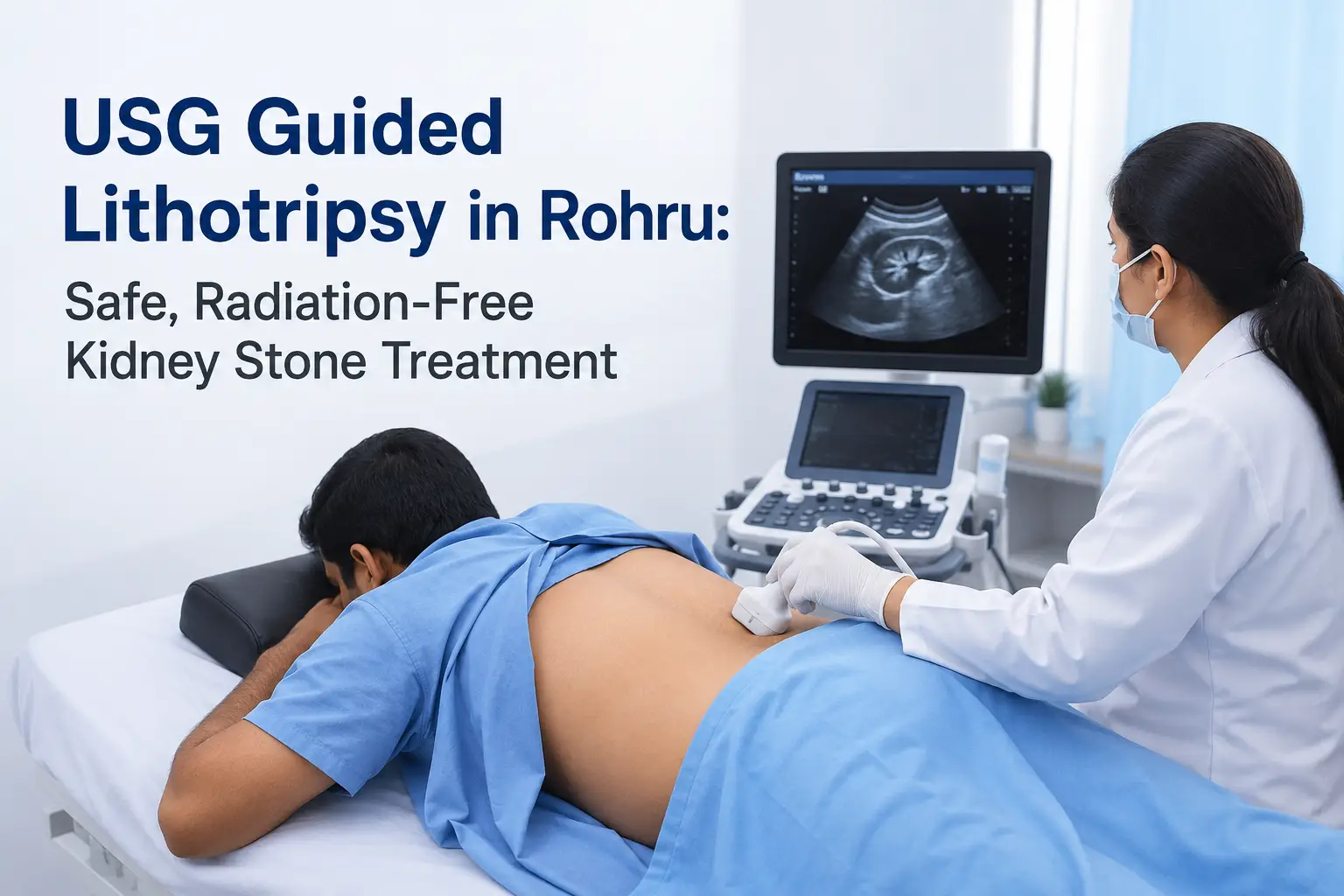
Kidney stones are one of the most painful conditions a person can experience, and for residents of Rohru and the surrounding hill towns of Himachal Pradesh, finding advanced, reliable treatment close to home has always been a challenge. Patients often had to travel long distances to cities like Shimla or Chandigarh just for a proper diagnosis and stone removal procedure. That is no longer the case.
Shanti Clinic & Nursing Home now brings USG guided lithotripsy in Rohru, a modern, minimally invasive, and radiation-free technique for treating kidney and bladder stones. Under the expert supervision of Dr. Roohail Sharma, this advanced procedure has helped hundreds of patients across Rohru and nearby areas get relief from stone-related pain without the risks associated with traditional surgery.
In this blog, we will explain what USG guided lithotripsy is, how it works, its benefits, who should consider it, and what to expect before, during, and after the procedure.
What Is USG Guided Lithotripsy?
USG guided lithotripsy stands for Ultrasonography (Ultrasound) Guided Lithotripsy. It is a technique used during procedures like Percutaneous Nephrolithotomy (PCNL) to locate and access kidney stones using real-time ultrasound imaging instead of X-ray (fluoroscopy).
In simple terms, instead of relying on repeated X-ray exposure to guide the needle and instruments toward the stone, the treating doctor uses an ultrasound probe to visualize the kidney, the stone, and the surrounding structures live on a screen. This allows for precise, accurate placement of instruments while completely avoiding radiation exposure to the patient.
Once access to the stone is achieved under ultrasound guidance, the stone is broken down into smaller fragments using laser or pneumatic lithotripsy devices, and the fragments are removed or naturally passed out of the body.
Why Ultrasound Guidance Matters
Traditionally, most stone removal procedures used fluoroscopy (a type of continuous X-ray) to guide the surgeon. While effective, this method exposes both the patient and the medical team to repeated doses of radiation, which is a concern especially for:
- Pregnant women
- Children and young adults
- Patients requiring multiple or repeat procedures
- Patients with kidney conditions requiring long-term monitoring
Ultrasound guidance eliminates this concern entirely. It also offers real-time, continuous visualization of soft tissue, blood vessels, and surrounding organs, which helps reduce the risk of accidental injury during the procedure. Medical literature comparing ultrasound-guided and fluoroscopy-guided kidney stone procedures has found comparable stone clearance outcomes between the two techniques, while ultrasound guidance avoids radiation exposure altogether.
How USG Guided Lithotripsy Works: Step-by-Step
- Diagnosis and Imaging: The process begins with a detailed ultrasound and clinical evaluation to confirm the size, location, and number of stones. This is done using the clinic’s general and pregnancy ultrasound services, which are also used for routine diagnostic scans.
- Pre-Procedure Preparation: Blood tests, urine tests, and a physical assessment are carried out to ensure the patient is fit for the procedure. The doctor discusses the treatment plan, expected recovery time, and any precautions.
- Positioning and Anesthesia: Depending on the stone’s location and the patient’s condition, appropriate anesthesia is administered, and the patient is positioned for the procedure.
- Ultrasound-Guided Access: Using real-time ultrasound imaging, the doctor identifies the exact location of the stone and creates a precise access path to it — without using X-ray guidance.
- Stone Fragmentation: Once access is achieved, a laser or pneumatic lithotripsy device is used to break the stone into small fragments.
- Fragment Removal: The fragmented stone particles are either flushed out, removed through the access tract, or left to pass naturally through the urinary tract over the following days.
- Recovery and Monitoring: The patient is monitored for a short period post-procedure before being discharged, with a follow-up scan scheduled to confirm complete stone clearance.
Benefits of USG Guided Lithotripsy
Patients across Rohru choose USG guided lithotripsy at Shanti Clinic for several important reasons:
1. Zero Radiation Exposure
Since the procedure relies entirely on ultrasound instead of X-ray, there is no cumulative radiation risk — making it especially suitable for younger patients and those needing repeat treatments.
2. Safe for a Wider Range of Patients
Ultrasound guidance is considered safer for patients with certain medical conditions where repeated radiation exposure would otherwise be a concern.
3. Real-Time, Continuous Imaging
Unlike intermittent X-ray images, ultrasound provides continuous live visualization, allowing the doctor to track the instrument’s path in real time and reduce the chance of injuring surrounding organs.
4. Minimally Invasive
The procedure typically involves smaller incisions compared to traditional open surgery, which translates to less post-operative pain and scarring.
5. Faster Recovery
Because the approach is precise and minimally invasive, most patients experience quicker recovery times and shorter hospital stays compared to conventional stone-removal surgery.
6. Reduced Hospital Stay
Studies comparing ultrasound-guided and X-ray-guided stone removal procedures have reported shorter average hospitalization periods with the ultrasound-guided approach (International Journal of Urology research).
7. High Precision, Fewer Complications
The clear, continuous visualization offered by ultrasound helps the treating doctor plan the safest possible access route, reducing the risk of complications such as bleeding or injury to nearby organs.
Who Should Consider USG Guided Lithotripsy?
This procedure may be recommended if you experience:
- Recurrent or severe flank/back pain
- Blood in urine (hematuria)
- Frequent urinary tract infections linked to stones
- Difficulty or pain during urination
- Stones detected on ultrasound or CT scan that are too large to pass naturally
- Stones that have not responded to medication or shockwave therapy
If you’re unsure whether your condition requires lithotripsy, our related blog on kidney stone removal without surgery explains the non-surgical treatment options that may be tried first, depending on your stone size and symptoms.
What to Expect Before the Procedure
Before recommending USG guided lithotripsy, the doctor will typically:
- Review your medical history and any existing conditions
- Conduct an ultrasound and, if needed, additional imaging to assess stone size, number, and location
- Order basic blood and urine tests
- Advise you on fasting requirements and medication adjustments (such as blood thinners) before the procedure
- Explain the entire process, risks, and expected recovery timeline in detail
Open communication with your doctor at this stage is important — do not hesitate to ask questions about anesthesia, recovery, or any specific concerns you may have.
What to Expect After the Procedure
Recovery from USG guided lithotripsy is generally smooth, but here’s what most patients experience:
- Mild discomfort or soreness near the access site for a few days
- A short hospital stay for observation (often just 1–2 days, depending on stone complexity)
- A follow-up ultrasound to confirm complete stone clearance
- Advice to drink plenty of water to help flush out any remaining fragments
- Temporary dietary or activity restrictions, as advised by the doctor
- A follow-up consultation to monitor kidney function and prevent recurrence
Most patients are able to resume normal daily activities within a week, though this can vary based on the size and location of the stone and the individual’s overall health.
Why Choose Shanti Clinic & Nursing Home for USG Guided Lithotripsy in Rohru
Shanti Clinic & Nursing Home is a trusted multi-specialty healthcare center in Rohru, known for combining modern medical technology with compassionate, patient-first care. When it comes to kidney stone treatment, patients choose us because of:
- Expert Care: Treatment is led by Dr. Roohail Sharma, an experienced physician trusted by patients across Rohru and the wider Himachal Pradesh region for advanced stone management.
- Advanced Technology: Our clinic uses modern ultrasound and laser lithotripsy equipment to ensure safe, radiation-free, and precise treatment.
- Comprehensive Diagnostics: From ultrasound imaging to lab tests, all diagnostics are available under one roof, avoiding the need to travel elsewhere for evaluation.
- Personalized Treatment Plans: Every patient’s stone size, location, and health condition is different, and treatment is customized accordingly.
- Local Accessibility: Patients from Rohru and nearby towns no longer need to travel to Shimla or other cities for advanced kidney stone care.
- Compassionate Support: From consultation to recovery, our team supports patients through every step of their treatment journey.
You can learn more about our approach to patient care on our About Us page, or reach out through our Contact page if you have any questions before booking a consultation.
Preventing Kidney Stones After Treatment
While USG guided lithotripsy effectively removes existing stones, prevention is equally important to avoid recurrence. Some simple habits that can help include:
- Drinking adequate water throughout the day (at least 2.5–3 litres, unless otherwise advised)
- Reducing salt and animal protein intake
- Limiting oxalate-rich foods (like spinach and certain nuts) if you’re prone to calcium oxalate stones
- Getting regular checkups, especially if you have had stones before
- Following any dietary or medical advice specific to the type of stone you had
Your doctor may also recommend periodic ultrasound follow-ups to catch any new stone formation early, before it becomes symptomatic.
Frequently Asked Questions (FAQs)
1. What is USG guided lithotripsy?
USG guided lithotripsy is a kidney stone treatment technique that uses ultrasound imaging, instead of X-ray, to guide the doctor in locating and accessing the stone before breaking it down and removing it.
2. Is USG guided lithotripsy painful?
The procedure is performed under appropriate anesthesia, so patients do not feel pain during the process. Mild soreness or discomfort after the procedure is normal and manageable with prescribed medication.
3. How is USG guided lithotripsy different from traditional lithotripsy?
Traditional lithotripsy procedures often use X-ray (fluoroscopy) for guidance, which involves radiation exposure. USG guided lithotripsy uses ultrasound instead, offering a radiation-free alternative with real-time imaging.
4. Is USG guided lithotripsy safe?
Yes. It is considered a safe and minimally invasive procedure, particularly beneficial for patients who need to avoid radiation exposure, such as pregnant women and those requiring repeat procedures.
5. How long is the recovery period after the procedure?
Most patients recover within a week, with a short hospital stay of 1–2 days for observation. Recovery time can vary depending on stone size, location, and the patient’s overall health.
6. Will I need surgery if I have kidney stones?
Not always. Smaller stones may pass naturally or be managed with medication. Larger or complicated stones may require lithotripsy or other procedures. A proper diagnosis by your doctor will determine the best approach for your case.
7. Where can I get USG guided lithotripsy in Rohru?
Shanti Clinic & Nursing Home offers USG guided lithotripsy in Rohru under the expert care of Dr. Roohail Sharma, along with complete diagnostic and follow-up support.
Conclusion
Kidney stones can significantly disrupt daily life, but effective, safe treatment is now available right here in Rohru. USG guided lithotripsy offers a radiation-free, minimally invasive, and highly precise way to treat kidney and bladder stones, with faster recovery and fewer complications compared to traditional approaches.
At Shanti Clinic & Nursing Home, our goal is to make advanced healthcare accessible to the people of Rohru and the surrounding hill regions, without the need to travel to larger cities. If you or a loved one is dealing with kidney stone pain, don’t wait for it to get worse.
Book your consultation today with Dr. Roohail Sharma at Shanti Clinic & Nursing Home, and take the first step toward safe, effective, and compassionate kidney stone treatment.