
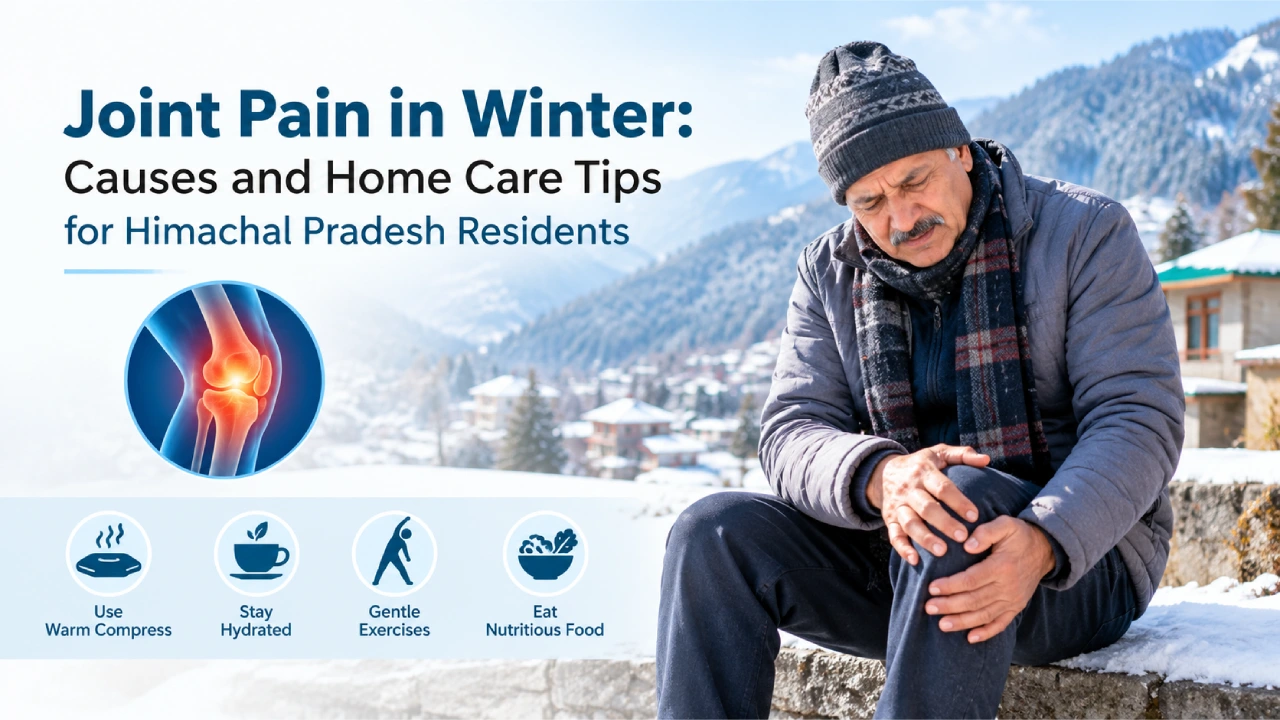
If you notice your knees, shoulders, or fingers acting up the moment the temperature drops, you’re not imagining it. For people living in Rohru, Shimla, and across the hills of Himachal Pradesh, winter joint pain is a genuine seasonal pattern — not just “getting older.” Here’s why it happens, what you can do about it at home, and when it’s time to see a doctor instead of waiting it out.
Why Does Joint Pain Increase in Winter?
There are a few real, physical reasons joint pain gets worse in cold weather — not just a feeling.
1. Barometric pressure changes
As temperatures drop, atmospheric pressure often falls too. Lower pressure allows tissues around joints to expand slightly, which can put extra pressure on nerves that control pain signals — especially in joints already affected by arthritis or old injuries.
2. Reduced blood flow to joints
In cold weather, your body prioritizes keeping your core warm, which means blood flow to your extremities — hands, knees, feet — naturally decreases. Less blood flow means stiffer joints and more discomfort with movement.
3. Thicker joint fluid
The synovial fluid that lubricates your joints becomes thicker in cold temperatures, similar to how oil thickens in cold engines. This makes joints feel stiffer, especially first thing in the morning.
4. Less physical activity
Cold weather naturally makes people move around less. Reduced activity leads to joint stiffness, muscle weakening around joints, and can worsen pain over time — a cycle that’s especially common during Himachal’s colder months.
5. Altitude and hill-region climate
For those living in higher-altitude areas of Himachal Pradesh, colder temperatures often arrive earlier and last longer than in the plains, meaning joint pain season can start well before winter officially begins elsewhere in India.
What Causes Knee Pain Specifically in Cold Weather?
Knees are one of the most commonly affected joints in winter, particularly for:
- People with existing osteoarthritis or previous knee injuries
- Older adults with naturally thinner cartilage
- Those who spend long hours in unheated indoor spaces during winter months, common in hill homes without central heating
The combination of cold air, reduced movement, and thicker joint fluid makes knees especially prone to morning stiffness and pain during winter in Himachal Pradesh.
Home Care Tips for Joint Pain Relief
Before reaching for medication, these home-based approaches genuinely help manage winter joint pain:
Keep joints warm, not just your body
Wearing warm layers helps overall, but joints specifically benefit from targeted warmth — knee sleeves, warm wraps, or simply keeping blankets nearby during the day, not just at night.
Stay physically active, even indoors
Gentle movement — short walks, light stretching, or basic range-of-motion exercises — keeps joint fluid moving and prevents the stiffness that comes from prolonged inactivity. Even 10-15 minutes a day makes a noticeable difference.
Warm water soaks or showers
Soaking affected joints in warm water, or simply taking a warm shower in the morning, helps loosen stiff joints before starting your day.
Maintain a healthy weight
Extra body weight adds direct pressure on knees and hips. In winter, when activity naturally drops, being mindful of diet becomes even more important for joint health.
Stay hydrated
People tend to drink less water in cold weather, but dehydration can make joint stiffness worse. Keep water intake consistent even when you’re not feeling as thirsty as in summer.
Simple massage with warm oil
A gentle massage with warm mustard or sesame oil — a common practice in Himachal households — can improve local blood circulation and ease stiffness in affected joints.
Arthritis Pain Management Tips for Winter
If you already have arthritis, winter requires a bit more proactive management:
- Stick to your prescribed medication schedule — don’t skip doses even if pain feels manageable during a milder day
- Avoid sudden exposure to cold, such as stepping outside quickly from a heated room
- Use warm compresses on affected joints before physical activity in the morning
- Continue light exercise recommended by your doctor rather than stopping completely due to cold weather
According to the Arthritis Foundation, staying warm and maintaining consistent gentle movement are among the most effective ways to manage weather-related arthritis flare-ups.
When Should You See a Doctor for Joint Pain?
Home care helps with mild, seasonal stiffness, but you should see a doctor if you experience:
- Joint pain that doesn’t improve with rest, warmth, or home care after a week or two
- Visible swelling, redness, or warmth around a joint
- Joint pain severe enough to limit daily activities like walking or climbing stairs
- Pain accompanied by fever, unexplained weight loss, or fatigue
- A significant increase in pain compared to previous winters
Ongoing or worsening joint pain shouldn’t be dismissed as “just winter” — it can indicate arthritis progression or another underlying condition that needs proper diagnosis and treatment.
How Shanti Clinic Can Help
If home care isn’t providing enough relief, our joint pain treatment and arthritis treatment services in Rohru offer proper diagnosis and personalized management plans — so you’re not just managing symptoms every winter, but addressing the underlying cause. Our team understands the specific challenges hill-region patients face with seasonal joint pain and builds treatment plans accordingly.
Frequently Asked Questions
1. Why does my joint pain get worse every winter?
Cold weather causes reduced blood flow, thicker joint fluid, and often less physical activity — all of which combine to make joints stiffer and more painful during winter months.
2. Is winter joint pain a sign of arthritis?
Not always — many people experience mild seasonal stiffness without having arthritis. However, if pain is severe, persistent, or accompanied by swelling, it’s worth getting checked, as it could indicate arthritis or another joint condition.
3. What’s the fastest home remedy for winter joint pain?
A warm compress or warm oil massage on the affected joint, combined with gentle movement, typically provides the quickest relief for mild stiffness.
4. Does living in a hill region like Himachal Pradesh make joint pain worse?
Higher altitudes and colder, longer winters common in Himachal Pradesh can mean joint pain starts earlier and lasts longer compared to warmer regions, making proactive winter care especially important here.
5. Should I stop exercising if my joints hurt in winter?
No — complete inactivity usually makes joint stiffness worse. Gentle, low-impact movement is generally recommended unless your doctor advises otherwise for a specific condition.
6. When should I stop trying home remedies and see a doctor?
If pain persists beyond 1-2 weeks despite home care, or if you notice swelling, redness, or difficulty with daily movement, it’s time for a proper medical evaluation rather than continuing to self-manage.