
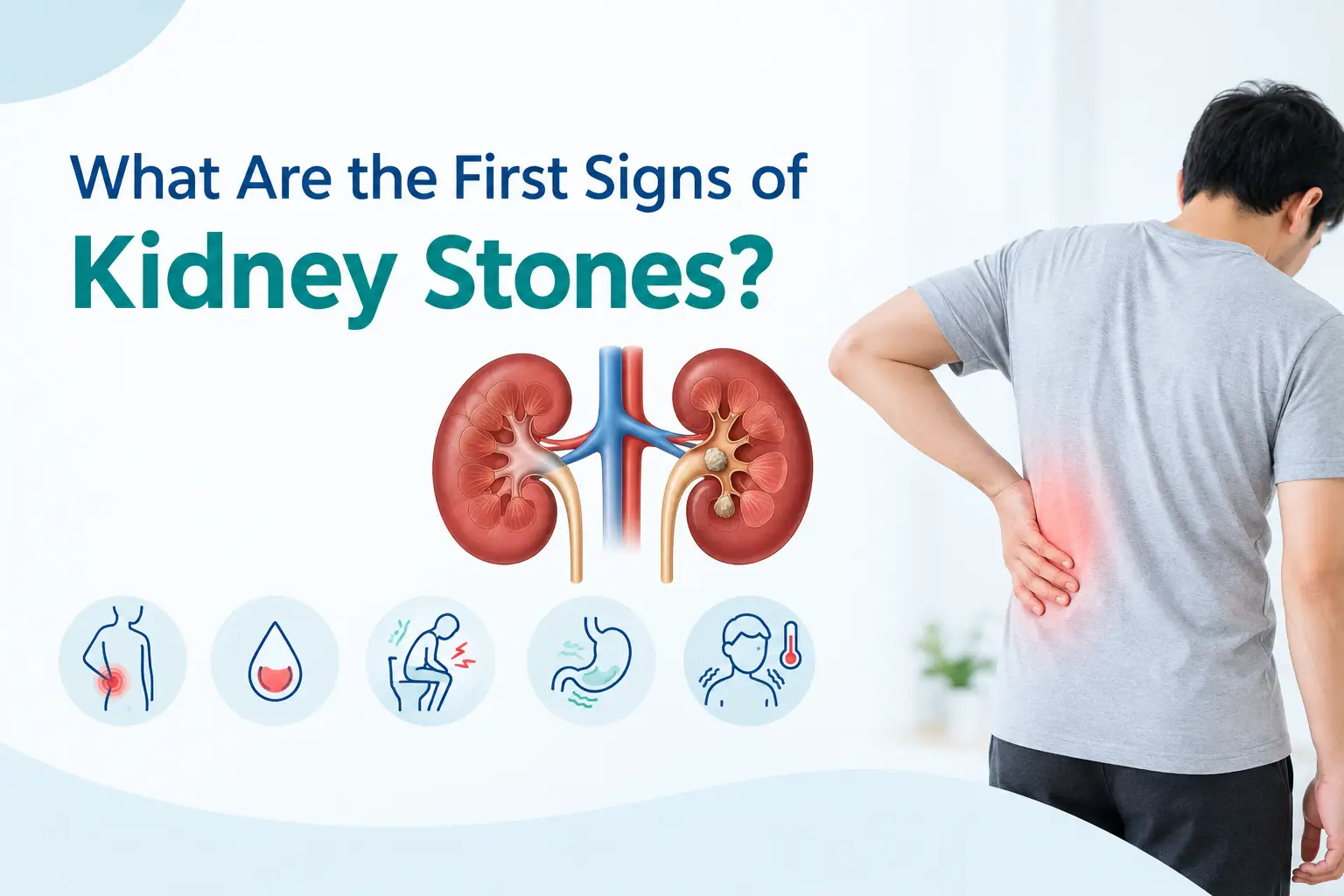
Kidney stones rarely announce themselves loudly at first. They often begin as a small, hard mass of minerals and salts quietly forming inside the kidney, causing no trouble at all — until the moment they start to move. That’s usually when people first notice something is wrong. A dull ache in the back, a sudden urge to urinate more often, or a faint trace of blood in the urine can all be the opening signs of a kidney stone working its way through the urinary tract.
Recognising these early signs matters because the sooner a stone is caught, the easier it is to treat — often without surgery at all. At Shanti Clinic & Nursing Home, Rohru, we see patients every week who waited too long, assuming their symptoms were “just a backache” or a minor stomach issue, only to arrive later in severe pain. This guide walks you through the earliest signs of kidney stones, why they happen, and what to do the moment you notice them.
What Exactly Is a Kidney Stone?
A kidney stone is a hard deposit made of minerals and salts — most commonly calcium oxalate — that forms inside the kidneys when urine becomes concentrated. When there isn’t enough fluid moving through the urinary system, these substances crystallise and stick together, gradually building into a stone. Stones can range from as small as a grain of sand to as large as a golf ball.
Small stones may pass unnoticed. Larger ones, or ones that get lodged in the ureter (the tube connecting kidney to bladder), are what usually trigger the classic painful symptoms people associate with kidney stones. But before that dramatic pain sets in, there are usually earlier, subtler warning signs.
The First Signs of Kidney Stones You Shouldn’t Ignore
1. A Dull Ache in the Back or Side
One of the earliest and most overlooked signs is a persistent, dull ache in the back, side, or just below the ribs — usually on one side only. This happens because the stone is still sitting in the kidney or beginning to move into the ureter, causing mild irritation and pressure. People often mistake this for a muscle strain or general fatigue, especially if the pain isn’t severe yet.
2. Frequent Urge to Urinate
If you suddenly find yourself needing to urinate far more often than usual — even when very little urine actually comes out — it could be an early sign that a stone has moved closer to the bladder. This increased urgency happens because the stone irritates the lining of the urinary tract.
3. Slight Discoloration or Cloudiness in Urine
Before visible blood appears, urine may look slightly pink, cloudy, or darker than normal. This subtle change is easy to miss, particularly if you’re not paying close attention, but it’s often one of the first physical clues that something is happening inside the urinary tract.
4. Mild Burning Sensation While Urinating
A slight burning or stinging feeling during urination — even without a full-blown infection — can indicate that a small stone is irritating the urethra or bladder lining as it moves.
5. Nausea or Loss of Appetite
Because the kidneys and digestive system share nerve pathways, early kidney stone activity can sometimes cause mild nausea, bloating, or a general loss of appetite, even before pain becomes noticeable.
6. Occasional Sharp Twinges of Pain
Unlike the constant, radiating pain associated with larger stones, early-stage discomfort often comes in short, sharp twinges that pass quickly. These twinges usually occur when the stone shifts position slightly within the kidney.
7. Slight Fever or Feeling “Off”
A mild, low-grade fever or a general feeling of being unwell can sometimes accompany the earliest stages of a kidney stone, particularly if there’s any associated inflammation. If a fever becomes high or persistent, it may signal an infection and needs urgent medical attention.
Why These Early Signs Get Ignored
Most people connect kidney stones only with the severe, stabbing pain that hits later — the kind that sends people to the emergency room. Because the early signs are milder and easier to explain away (a tiring day at work, dehydration, a mild stomach bug), they often go unnoticed until the stone grows larger or moves into a more sensitive part of the urinary tract.
This is exactly why understanding subtle warning signs matters. Catching a stone while it’s still small dramatically increases the chances of passing it naturally with fluids and medication, avoiding more invasive treatment later. We’ve covered the fuller picture of symptoms, including the more advanced warning signs, in our detailed guide on kidney stone symptoms and early warning signs.
What Happens If Early Signs Are Ignored?
If the first, mild signs of a kidney stone go unaddressed, the stone typically continues to grow or shift position, leading to:
- Severe, radiating pain in the back, side, or groin that comes in waves
- Visible blood in urine
- Persistent nausea and vomiting
- High fever and chills, indicating a possible infection
- Difficulty urinating or urine blockage, which can be a medical emergency
At this stage, treatment options usually shift from simple hydration and medication to procedures like lithotripsy or, in more complex cases, surgical intervention. You can read more about how doctors decide between these approaches in our comparison of laser treatment versus surgery for kidney stones.
Who Is Most at Risk?
While anyone can develop kidney stones, certain factors increase the risk of forming them early and more frequently:
- Not drinking enough water, especially in hot climates or physically demanding jobs
- A diet high in salt, sugar, or animal protein
- A family history of kidney stones
- Obesity or a sedentary lifestyle
- Certain medical conditions, such as gout, hyperparathyroidism, or urinary tract infections
- Some medications and supplements, particularly high-dose vitamin C or calcium
If you fall into one or more of these categories, it’s worth being extra attentive to the early signs discussed above. According to the National Institute of Diabetes and Digestive and Kidney Diseases (NIDDK), staying well hydrated is one of the most effective ways to reduce your risk of ever forming a stone in the first place.
When Should You See a Doctor?
You don’t need to wait for unbearable pain to seek medical advice. It’s a good idea to consult a doctor as soon as you notice:
- A dull, one-sided backache that doesn’t go away after a day or two
- Any blood or unusual colour in your urine
- A burning sensation while urinating that isn’t linked to an infection you already know about
- Frequent urges to urinate with little output
- Mild nausea combined with any of the above
Early diagnosis, typically through a simple ultrasound or urine test, can confirm whether a stone is present and how large it is — long before it becomes a medical emergency. If you’re searching for reliable, experienced care nearby, our guide on choosing a kidney stone doctor near you explains what to look for in a specialist.
How Shanti Clinic Diagnoses and Treats Kidney Stones Early
At Shanti Clinic & Nursing Home, Rohru, we focus on catching kidney stones at their earliest, most treatable stage. Our approach includes:
- USG-guided diagnosis to accurately locate and size the stone without exposing patients to unnecessary radiation — read more about our USG-guided lithotripsy process
- Non-surgical treatment options wherever possible, helping patients avoid hospital stays and long recovery times — explore our approach to kidney stone removal without surgery
- Personalised prevention plans based on diet, hydration, and lifestyle, so stones don’t come back — see our 12 doctor-recommended kidney stone prevention tips
- Transparent, affordable care, with clear guidance on costs from the very first consultation — detailed in our kidney stone treatment cost guide
Because we serve Rohru and the surrounding hill communities, we understand how difficult it can be to travel long distances for follow-up visits once symptoms escalate. That’s exactly why we encourage patients to come in the moment they notice the first, mild signs — not after the pain becomes severe.
Simple Steps to Take at the First Sign of a Kidney Stone
If you suspect you’re experiencing early kidney stone symptoms, here’s what you can do right away:
- Increase your water intake — aim for enough fluids to keep your urine pale yellow throughout the day.
- Avoid excess salt and animal protein temporarily, as these can worsen stone formation.
- Track your symptoms — note when the ache occurs, how often you’re urinating, and any changes in urine colour.
- Avoid self-medicating with painkillers for more than a day or two without medical advice, as this can mask a worsening problem.
- Book a diagnostic scan as soon as possible rather than waiting for pain to intensify.
You can book a consultation directly through our appointment page, and our team will guide you through the right diagnostic tests based on your symptoms.
Frequently Asked Questions (FAQs)
1. What is usually the very first sign of a kidney stone?
For most people, the earliest sign is a mild, dull ache in the back or side on one side of the body, often mistaken for a muscle strain. This is usually followed by changes in urination frequency or urine colour.
2. Can you have a kidney stone without feeling any pain?
Yes. Small stones that stay within the kidney and don’t move into the ureter often cause no pain at all. They may only be discovered during a routine ultrasound or scan for an unrelated issue.
3. How can I tell the difference between a kidney stone and a normal backache?
A kidney stone-related ache is usually one-sided, doesn’t improve with rest or stretching, and may be accompanied by other symptoms like frequent urination, cloudy urine, or mild nausea. A muscular backache typically responds to rest and movement.
4. Is blood in urine always a sign of a kidney stone?
Not always, but it’s a symptom that should never be ignored. Blood in urine can indicate a kidney stone, but it can also point to a urinary tract infection or other urological conditions, so a proper diagnosis is essential.
5. How soon should I see a doctor after noticing early symptoms?
Ideally, within a few days of noticing persistent symptoms like backache, changes in urination, or discoloured urine. Early diagnosis through a simple ultrasound can confirm the presence of a stone before it grows larger or causes complications.
6. Can early-stage kidney stones be treated without surgery?
In many cases, yes. Small stones can often be managed with increased fluid intake, medication, and monitoring. Larger stones may require non-invasive procedures like lithotripsy, which Shanti Clinic offers using USG-guided technology.
7. Does drinking more water help once symptoms have already started?
Yes, increasing water intake can help flush out small stones and ease mild symptoms. However, it should be paired with a proper diagnosis, since larger stones may need medical intervention regardless of fluid intake.
Conclusion
The first signs of kidney stones are often quiet — a dull backache, a slightly cloudy urine sample, an unusual urge to urinate more frequently. It’s easy to brush these off as minor, everyday discomforts, but they’re often your body’s earliest warning that a stone is forming or beginning to move. Paying attention to these subtle signals, staying well hydrated, and seeking medical advice early can mean the difference between a simple, non-surgical recovery and a painful emergency later on.
If you or a loved one in Rohru or the surrounding areas are experiencing any of these early symptoms, don’t wait for the pain to become unbearable. The specialists at Shanti Clinic & Nursing Home are equipped with modern diagnostic tools and a range of non-surgical and surgical treatment options to help you recover quickly and comfortably. Book your appointment today and take the first step toward lasting relief.