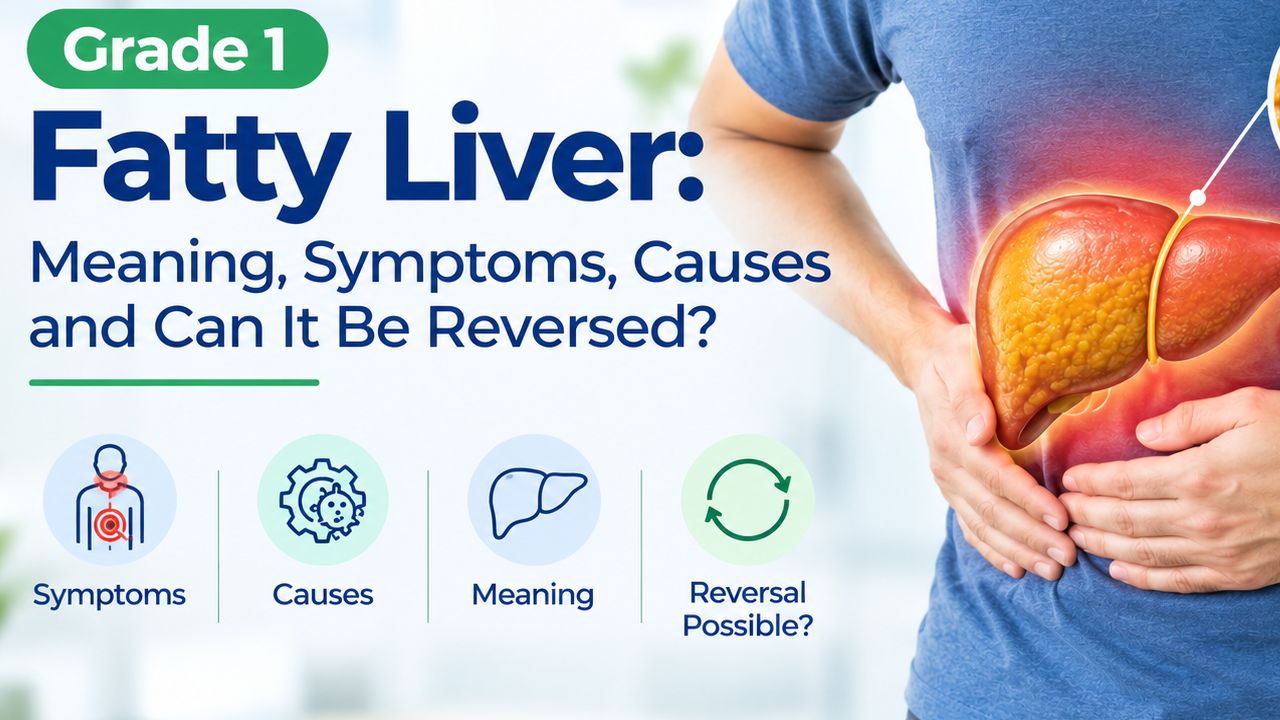
You have just collected your ultrasound report, and it says grade 1 fatty liver. It is natural to feel worried. The good news is that grade 1 is the mildest stage, and in most people it can be improved with the right changes to diet and lifestyle. Acting now is the best way to stop it from progressing.
In this guide, our team at Shanti Clinic in Rohru explains what grade 1 fatty liver means, its symptoms and causes, whether it can be reversed, and when you should see a doctor.What Is Grade 1 Fatty Liver?
Fatty liver means that extra fat has collected inside the liver cells. A healthy liver contains a small amount of fat. When the amount becomes higher than normal, doctors call it fatty liver, or hepatic steatosis. Doctors grade it as mild (grade 1), moderate (grade 2) or severe (grade 3). Grade 1 is the earliest and mildest of these.What does “grade 1 fatty infiltration of liver” mean on an ultrasound report?
Your ultrasound report may use the words “grade 1 fatty infiltration of liver”, “mild fatty liver” or “increased echogenicity of the liver”. All of these point to the same finding: the liver looks slightly brighter than normal on the scan because of fat deposits. It does not mean you have liver damage or a serious disease. It is an early warning that your liver needs attention.Grade 1 vs stage 1 fatty liver
Many people search for “stage 1 fatty liver” and “grade 1 fatty liver” and wonder whether they are different. In everyday use, both terms describe the same mild, early condition. A doctor will look at your complete picture, including blood tests, to guide your care.| Grade | Meaning | What it usually indicates |
|---|---|---|
| Grade 1 | Mild | Small amount of extra fat; often reversible |
| Grade 2 | Moderate | More fat; needs closer attention |
| Grade 3 | Severe | Large amount of fat; needs medical care |
Symptoms of Grade 1 Fatty Liver
Most people with grade 1 fatty liver have no symptoms at all. It is usually found by chance during an ultrasound done for another reason, such as stomach pain or a routine health check. Some people may notice mild signs, such as:- Feeling tired or low on energy
- A mild heaviness or discomfort in the upper right side of the abdomen
- A feeling of fullness after eating
What Causes Fatty Liver?
Fatty liver is not caused only by alcohol. Many people who never drink develop it. Common causes and risk factors include:- Being overweight or having extra belly fat
- Diabetes or insulin resistance, which makes it harder for the body to handle sugar
- High cholesterol and triglycerides
- A diet high in sugar, refined carbohydrates and fried food
- Lack of physical activity
- Regular alcohol intake, which can add to the fat in the liver
Is Grade 1 Fatty Liver Serious?
Grade 1 fatty liver is usually mild and not dangerous on its own. Many people live with it for years without problems. However, it should not be ignored. If the underlying causes continue, such as a poor diet, weight gain or uncontrolled sugar, the fat can build up further. Over time, some people develop inflammation and scarring in the liver. This is why doctors treat grade 1 as a chance to act early, while the condition is easiest to improve.Can Grade 1 Fatty Liver Be Reversed?
In many people, yes. Because grade 1 is the early stage, healthy changes to your daily routine can reduce the fat in the liver. How quickly this happens differs from person to person, so a doctor’s follow-up is important. Here are the main steps that help.1. Change your diet
- Eat more vegetables, fruits, whole grains, pulses and nuts
- Cut down on sugary drinks, sweets, bakery items and deep-fried snacks
- Choose home-cooked food and use less oil
2. Stay physically active
Regular movement, such as brisk walking, cycling or yoga, helps your body use fat and sugar better. Choose an activity you enjoy and can keep up. If you have a heart, joint or other health problem, check with your doctor first.3. Manage your weight gradually
If you are overweight, slow and steady weight loss helps the liver. Avoid crash diets or extreme fasting, as they can harm your health.4. Control blood sugar, cholesterol and blood pressure
Fatty liver is closely linked to diabetes and high cholesterol. Keeping these under control protects your liver. If you have high sugar, our team can help through our diabetes treatment in Rohru service.5. Limit alcohol and avoid unnecessary medicines
If you drink alcohol, speak to your doctor about reducing or stopping it. Do not take herbal supplements or painkillers for long periods without medical advice, because some can strain the liver. For more daily habits that protect your liver and stomach, read our top lifestyle habits for a healthy stomach and liver.Tests and Follow-up for Fatty Liver
Ultrasound
An abdominal ultrasound is the most common first test. It is painless, quick and shows whether fat is present in the liver. You can get a scan at our ultrasound centre in Rohru.Blood tests
Your doctor may advise a liver function test, blood sugar and a lipid profile (cholesterol and triglycerides). These show how well your liver is working and whether other risk factors are present.Further tests
If your doctor suspects more than mild fat build-up, they may suggest additional tests, such as an elastography scan, to check for stiffness or scarring of the liver. Your doctor will also tell you when to repeat your ultrasound.When Should You See a Doctor?
Even if you feel well, it is a good idea to have your grade 1 fatty liver reviewed by a doctor. Get medical advice soon if you notice:- Ongoing pain or swelling in the upper right abdomen
- Yellowing of the eyes or skin
- Swelling in the legs or stomach
- Unexplained weight loss or loss of appetite
- Abnormal liver blood tests, or a report that shows grade 2 or grade 3 fatty liver
Fatty Liver Treatment in Rohru at Shanti Clinic
At Shanti Clinic, we help patients understand their reports and make a clear plan to improve liver health. Our care includes a detailed consultation, ultrasound, review of blood tests, personalised diet and lifestyle guidance, and regular follow-up. You can meet Dr. Roohail Sharma to discuss your report. Learn more about our fatty liver treatment in Rohru, and if you have stomach or digestion complaints along with it, see our digestion problem treatment in Rohru. Book an appointment today and take the first step towards a healthier liver.Frequently Asked Questions
Grade 1 fatty liver is usually mild and is not dangerous on its own. But if the causes are not corrected, it can progress, so it is best to take it seriously and get medical advice.
It rarely improves without any change. Most people need healthier eating, more activity and control of sugar and cholesterol to bring the fat down.
There is no fixed time. It depends on your weight, diet, activity and other health conditions. Your doctor can repeat your ultrasound at the right time to check progress.
Focus on vegetables, fruits, whole grains, pulses and nuts, and limit sugar, refined flour, fried food and alcohol. Our guide to the best foods for a healthy liver has more ideas.
People use both terms for the same early, mild condition. Your doctor will explain what your specific report means.
Many people with grade 1 fatty liver are advised lifestyle changes first. Whether you need any medicine depends on your tests and other conditions, so please do not start any treatment without consulting a doctor.
Final Thoughts
Grade 1 fatty liver is an early warning, not a reason to panic. With healthier food, regular activity, good control of sugar and cholesterol, and proper follow-up, many people can improve their liver health. The earlier you act, the better the result.
If you have received a fatty liver report and are unsure what to do next, book a consultation at Shanti Clinic in Rohru.
Disclaimer: This article is for general information only and is not a substitute for professional medical advice, diagnosis or treatment. Please consult a qualified doctor about your own health.