Diabetes often starts quietly. Many people live with high blood sugar for years without knowing it, because early symptoms are mild and easy to blame on stress, age, or a busy routine. By the time the diagnosis comes, some people already have damage to their eyes, kidneys, nerves, or heart. Knowing the early signs of diabetes, and getting tested on time, is one of the simplest ways to protect your long-term health.
What Happens in Your Body When Blood Sugar Is High?
Your body uses a hormone called insulin to move sugar (glucose) from your blood into your cells for energy. In diabetes, either the body doesn’t make enough insulin or can’t use it properly. Sugar then builds up in the blood, and your kidneys try to flush the extra out through urine. That single process explains many of the classic symptoms below: more urination, more thirst, and tiredness because your cells aren’t getting the energy they need.
10 Early Signs of Diabetes
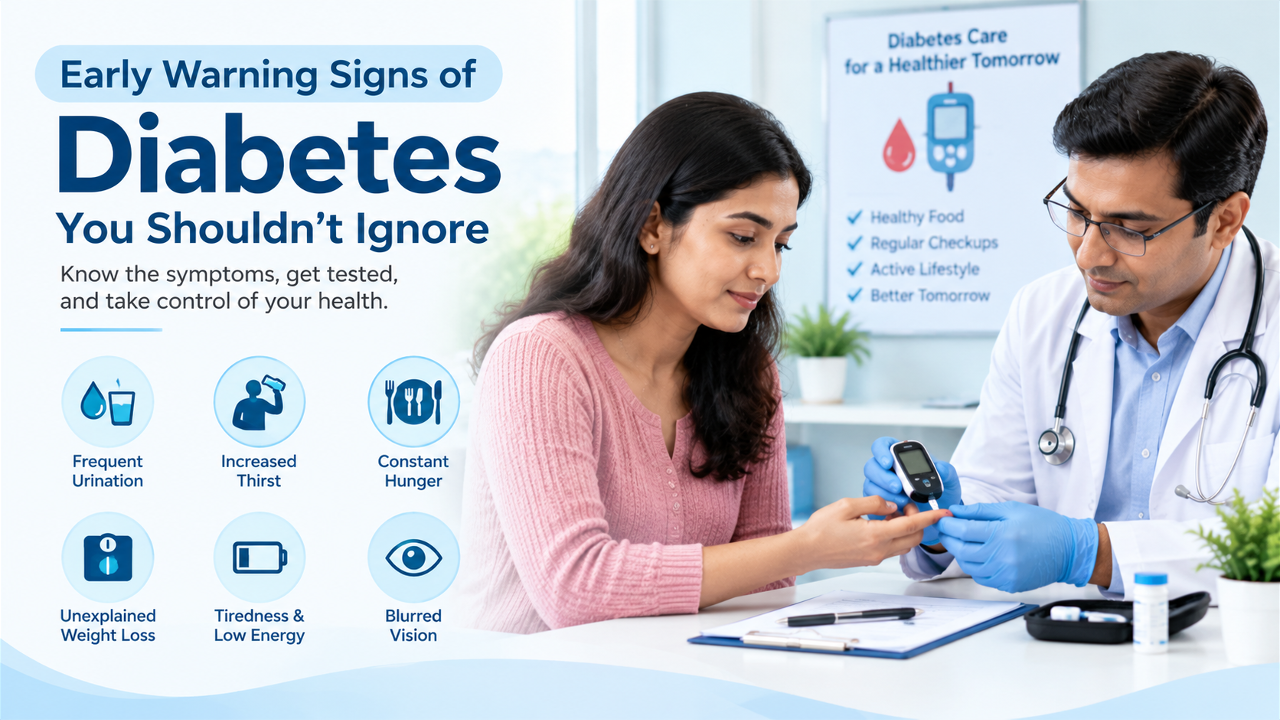
1. Frequent urination
Passing urine much more often than usual, especially at night, is one of the earliest signs. Your kidneys are working to remove excess sugar.
2. Constant thirst
Losing extra fluid through urine leaves you dehydrated, so you feel thirsty and dry-mouthed even after drinking.
3. Unusual hunger
Even after eating, you may feel hungry because your cells aren’t getting enough glucose.
4. Unexplained weight loss
Losing weight without trying, despite eating normally, can happen when the body burns fat and muscle for energy instead.
5. Tiredness and weakness
Feeling drained all the time, even after rest, is very common when cells are starved of energy.
6. Blurred vision
High blood sugar can cause fluid shifts in the eye, making vision blurry. This is often temporary at first but should never be ignored.
7. Slow-healing cuts and wounds
High sugar affects blood flow and the body’s healing ability, so small cuts, sores, or bruises take longer to heal.
8. Frequent infections
Repeated skin infections, urinary tract infections, gum problems, or fungal infections can point to high blood sugar.
9. Tingling or numbness in hands and feet
Over time, high sugar can irritate nerves, causing tingling, burning, or numbness, usually in the feet first.
10. Dark patches of skin
Darker, velvety patches on the neck, armpits, or groin (called acanthosis nigricans) can signal insulin resistance, often before diabetes develops.
Having one symptom does not mean you have diabetes, but having several together, or any of them persisting, is a good reason to get a simple blood test.
Symptoms of High Blood Sugar
When blood sugar is very high, symptoms can get stronger. Watch for:
- Intense thirst and very frequent urination
- Nausea or vomiting
- Fruity-smelling breath
- Rapid breathing
- Confusion or extreme drowsiness
- Stomach pain
These can be signs of a medical emergency such as diabetic ketoacidosis, especially in someone already diagnosed with diabetes. Seek urgent medical care if they appear. Our emergency medical facilities in Rohru are available for urgent situations.
Prediabetes Symptoms: The Warning Stage
Prediabetes means blood sugar is higher than normal but not yet high enough to be called diabetes. The key point is that prediabetes usually has no symptoms at all, which is why so many people miss it. When signs do appear, they are often subtle:
- Dark patches on the skin around the neck or armpits
- Increased tiredness
- Slightly increased thirst or urination
- Skin tags appearing in the neck or armpit area
Prediabetes is the best time to act. With changes in diet, activity, and weight, many people can prevent or delay type 2 diabetes entirely.
How to Know If You Have Diabetes
Symptoms alone cannot confirm diabetes. Only a blood test can. The common tests are:
- Fasting blood sugar: measured after at least 8 hours without food
- HbA1c: shows your average blood sugar over the past 2 to 3 months, and needs no fasting
- Random blood sugar: measured at any time, usually along with symptoms
- Oral glucose tolerance test: sugar is measured before and after a glucose drink
According to widely used guidelines, a fasting sugar of 126 mg/dL or higher, or an HbA1c of 6.5% or higher, indicates diabetes, while a fasting sugar of 100 to 125 mg/dL or HbA1c of 5.7% to 6.4% suggests prediabetes. Exact interpretation should always be done by your doctor, who will consider repeat testing and your overall health.
You can get these tests at our lab tests and diagnostic center in Rohru, including sugar tests and HbA1c, without traveling to Shimla.
Diabetes Risk Factors
Some people are more likely to develop type 2 diabetes. Your risk is higher if you:
- Have a family history of diabetes (parent or sibling)
- Are overweight, especially with extra weight around the belly
- Are physically inactive
- Are over 35 to 40 years of age (South Asians can develop diabetes earlier and at lower body weights)
- Have high blood pressure or high cholesterol
- Had gestational diabetes during pregnancy
- Have PCOS (polycystic ovary syndrome)
- Eat a diet high in refined carbohydrates and sugary foods
If you have two or more of these, regular screening, even without symptoms, is a smart habit.
Can Diabetes Be Prevented or Reversed?
Type 2 diabetes can often be prevented or delayed with lifestyle changes. Type 1 diabetes cannot be prevented. For type 2, helpful steps include:
- Eating more vegetables, whole grains, and protein, and cutting back on sugary drinks and refined foods
- Walking or exercising at least 30 minutes most days
- Losing even a modest amount of weight if overweight
- Sleeping well and managing stress
- Avoiding smoking and limiting alcohol
Some people with early type 2 diabetes achieve remission through major lifestyle changes, but this needs medical supervision, and diabetes can return if old habits come back. Never stop prescribed medicines on your own.
According to the World Health Organization, healthy diet, regular physical activity, maintaining a normal body weight, and avoiding tobacco can prevent or delay type 2 diabetes.
Why Early Detection Matters
Untreated high blood sugar slowly damages blood vessels and nerves. Over the years it can lead to:
- Heart disease and stroke
- Kidney damage
- Eye damage that can lead to vision loss
- Nerve damage and foot problems
- Slow-healing wounds and infections
The earlier diabetes is found, the easier it is to control and the lower the risk of these complications. Diabetes also often goes hand in hand with other conditions, so it’s worth checking blood pressure and thyroid health at the same time, as thyroid disorders are also common (see our guide to thyroid problems in women).
When to See a Doctor
Book a test if you notice:
- Increased thirst, frequent urination, or unexplained weight loss
- Constant tiredness or blurred vision
- Cuts or infections that heal slowly
- Tingling or numbness in your hands or feet
- Dark skin patches on your neck or armpits
- A family history of diabetes combined with other risk factors
Even without symptoms, adults over 35, or younger adults with risk factors, should get screened regularly.
How Shanti Clinic Can Help
At Shanti Clinic in Rohru, you can get tested, diagnosed, and treated in one place. Our diabetes treatment services cover diagnosis, treatment planning, diet and lifestyle guidance, and regular monitoring. Our lab tests and diagnostic center offers fasting and random sugar tests and HbA1c, so you can get answers quickly and close to home.
Frequently Asked Questions
The most common early signs are frequent urination, constant thirst, increased hunger, tiredness, blurred vision, and slow-healing wounds. Some people have no symptoms at all.
Yes. Type 2 diabetes and prediabetes often cause no noticeable symptoms for years, which is why regular screening matters, especially if you have risk factors.
In prediabetes, blood sugar is higher than normal but below the diabetes range. It is a warning stage that can often be reversed with lifestyle changes. Diabetes is diagnosed when levels cross the diabetes threshold on repeated tests.
A home glucometer can give a quick reading, but diagnosis needs laboratory tests such as fasting sugar or HbA1c, interpreted by a doctor.
Family history raises your risk, especially for type 2 diabetes, but lifestyle plays a major role. Many people with a family history avoid diabetes by staying active and keeping a healthy weight.
No. HbA1c doesn’t require fasting, because it reflects your average sugar over the past few months.
Adults are generally advised to start screening around age 35, and earlier if overweight or with other risk factors. Ask your doctor what suits you.
Type 2 diabetes can sometimes go into remission with major lifestyle changes, but it needs ongoing monitoring. Type 1 diabetes always needs insulin. Treatment should always be guided by a doctor.