Thyroid disorders are among the most commonly missed health conditions in women — often mistaken for stress, weight fluctuation, or simply “getting older.” The thyroid, a small gland in your neck, controls metabolism, energy, mood, and much more. When it doesn’t function properly, the effects can show up in almost every part of the body. This guide covers the two main types of thyroid problems, their symptoms, and when it’s time to get tested.
Why Are Thyroid Problems More Common in Women?
Women are significantly more likely than men to develop thyroid conditions — largely due to hormonal factors, pregnancy-related changes, and autoimmune tendencies that are more common in women. According to the American Thyroid Association, women are up to eight times more likely than men to develop a thyroid condition, with issues often first appearing or worsening during pregnancy, postpartum, and around menopause.
The Two Main Types of Thyroid Problems
Thyroid conditions generally fall into two opposite categories, and understanding the difference is the first step to recognizing what you might be dealing with.
Hyperthyroidism (Overactive Thyroid)
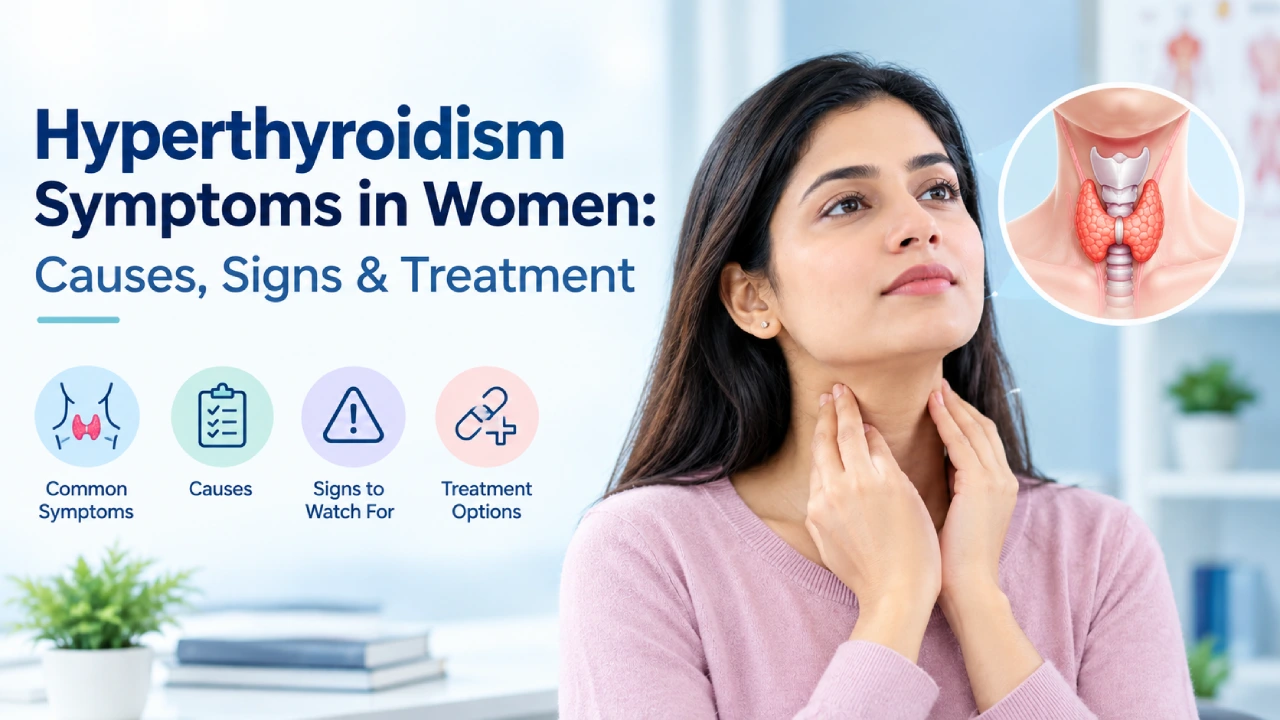
This occurs when the thyroid produces too much hormone, speeding up the body’s metabolism. Common signs include unexplained weight loss, rapid heartbeat, excessive sweating, anxiety, and difficulty sleeping. One common cause is Graves’ disease, an autoimmune condition. We’ve covered this condition in full detail, including causes, pregnancy considerations, and treatment, in our dedicated guide on hyperthyroidism symptoms in women.
Hypothyroidism (Underactive Thyroid)
This is the opposite — the thyroid doesn’t produce enough hormone, slowing the body down. Common signs include unexplained weight gain, fatigue, feeling cold, dry skin, and hair thinning. This is actually the more common of the two conditions, especially in women over 40. Our detailed guide on underactive thyroid symptoms in women covers causes, diet, and what your TSH levels mean.
A simple way to remember the difference: hyperthyroidism speeds the body up; hypothyroidism slows it down.
General Symptoms That Signal a Thyroid Problem
Regardless of which type, these symptoms are worth paying attention to — especially if several appear together:
- Unexplained changes in weight (gain or loss)
- Persistent fatigue or, conversely, restlessness
- Changes in heart rate (too fast or too slow)
- Hair thinning or hair loss
- Changes in skin texture (too dry or too sweaty)
- Mood changes — anxiety or depression
- Irregular menstrual cycles
- Difficulty with temperature regulation (feeling too hot or too cold)
- A visible swelling in the neck (goiter)
Because these symptoms overlap with many other conditions, a simple blood test (TSH) is the most reliable way to know what’s actually going on.
How Is Thyroid Function Tested?
A TSH (Thyroid Stimulating Hormone) blood test is the standard first step. Depending on results, your doctor may also check T3 and T4 hormone levels for a complete picture. This is a quick, straightforward blood test available at our lab tests and diagnostic center in Rohru — no need to travel for basic thyroid screening.
Can Thyroid Problems Be Treated?
Yes — both hyperthyroidism and hypothyroidism are manageable conditions, usually with medication, and many people live completely normal lives once properly diagnosed and treated. The key is catching it early, since untreated thyroid conditions can affect heart health, bone density, fertility, and pregnancy outcomes over time.
When Should You Get Tested?
Consider getting a thyroid test if you experience:
- Several of the symptoms listed above together, especially if they’ve developed gradually
- A family history of thyroid conditions
- Irregular periods or fertility concerns
- Unexplained fatigue or weight changes that don’t match your lifestyle
- You’re pregnant or planning pregnancy (thyroid function directly affects pregnancy health)
Explore the Specific Condition You May Be Experiencing
Since hyperthyroidism and hypothyroidism have different symptoms, causes, and treatment approaches, we’ve covered each in full detail separately:
- Hyperthyroidism Symptoms in Women → — overactive thyroid: causes, pregnancy considerations, diet, and treatment
- Underactive Thyroid (Hypothyroidism) Symptoms in Women → — weight gain, hair loss, diet, and TSH levels explained
How Shanti Clinic Can Help
Our thyroid treatment services in Rohru include testing, diagnosis, and ongoing management for both hyperthyroidism and hypothyroidism — so you don’t need to travel to Shimla for proper thyroid care.
Frequently Asked Questions
Early signs often include unexplained weight loss, a faster heartbeat, anxiety or irritability, heat intolerance, sweating, and trouble sleeping. Lighter or irregular periods are also common.
Yes. Excess thyroid hormone can make hair thinner and cause shedding. It usually improves once thyroid levels are controlled, though regrowth takes a few months.
It can be if left untreated, as it may affect the heart, bones, eyes, and pregnancy. With timely treatment, these risks are largely manageable.
It is treatable and often well controlled. Some people achieve long-term remission, while others need ongoing medication or definitive treatment such as radioactive iodine or surgery. Your doctor will advise based on the cause.
Focus on protein, calcium, vitamin D, fruits, and vegetables. Limit excess iodine and caffeine. Check with your doctor before changing your diet or taking supplements.
It needs careful management. Untreated hyperthyroidism can raise pregnancy risks, but with proper medical supervision most women have healthy pregnancies.
Thyrotoxicosis means too much thyroid hormone in the body from any cause. Hyperthyroidism specifically means an overactive thyroid gland producing too much hormone.