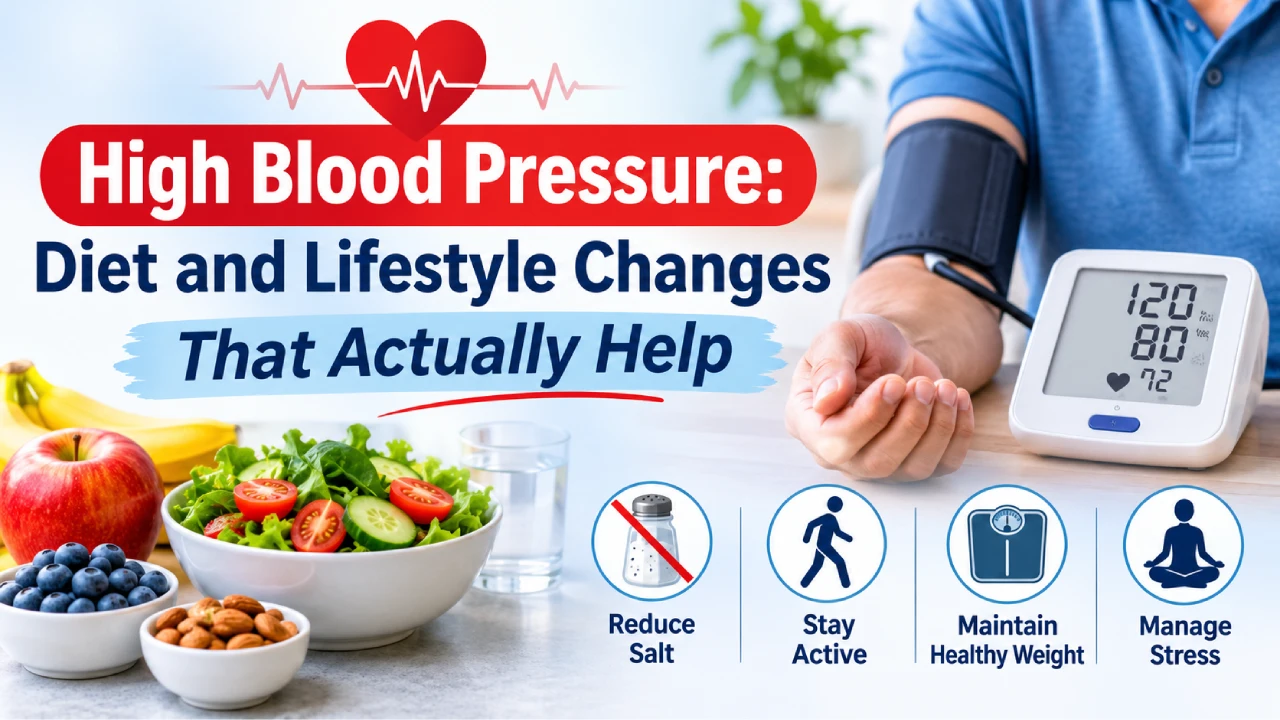
High blood pressure (hypertension) is often called a “silent” condition because most people feel completely normal while it quietly damages the heart, brain, kidneys, and eyes. The good news is that diet and daily habits make a real difference. For many people they can lower blood pressure noticeably, and they work alongside any medicine your doctor prescribes. This guide explains what blood pressure numbers mean, which foods help and which to avoid, and the lifestyle changes with the strongest evidence behind them.
What Is Normal Blood Pressure?
Blood pressure is written as two numbers, for example 120/80 mmHg. The top number (systolic) is the pressure when your heart beats, and the bottom number (diastolic) is the pressure when your heart rests between beats.
| Category | Systolic (mmHg) | Diastolic (mmHg) |
|---|---|---|
| Normal | Below 120 | Below 80 |
| Elevated | 120 to 129 | Below 80 |
| High BP (Stage 1) | 130 to 139 | 80 to 89 |
| High BP (Stage 2) | 140 or higher | 90 or higher |
| Hypertensive crisis | Above 180 | Above 120 |
Note: Blood pressure readings are measured in mmHg. If your reading is above 180 systolic and/or above 120 diastolic, seek immediate medical guidance. If accompanied by chest pain, breathlessness, weakness, vision changes or difficulty speaking, seek emergency medical care.
These ranges are widely used guideline values, and doctors may set different targets depending on your age, diabetes, kidney disease, or heart history. Diagnosis needs repeated readings on different days, not a single high number.
Blood Pressure Chart by Age
There is no separate “normal” for each age group, but blood pressure tends to rise with age, and readings vary a little between people. As a rough guide, most healthy adults aim for about 120/80 mmHg or lower, whatever their age. Older adults often have higher systolic readings because arteries stiffen over time, which is why regular monitoring becomes more important after 40. If your readings are consistently above 130/80, talk to your doctor instead of assuming it is “normal for your age.”
Symptoms of High Blood Pressure
Most people with high blood pressure have no symptoms, which is exactly why it is dangerous. Checking your BP regularly is the only reliable way to catch it. When blood pressure is very high, some people notice:
- Severe headache, especially at the back of the head
- Dizziness or blurred vision
- Nosebleeds
- Chest pain or shortness of breath
- Unusual tiredness or confusion
Chest pain, severe headache with confusion, weakness on one side, or trouble speaking are emergencies. Go to a hospital immediately. Our emergency medical facilities in Rohru are available for urgent situations.
Diet Changes to Lower Blood Pressure
Food is one of the most powerful tools you have. The most studied eating pattern is the DASH diet (Dietary Approaches to Stop Hypertension), which focuses on vegetables, fruits, whole grains, low-fat dairy, and less salt. Here is how to apply it in everyday Indian meals.
1. Cut Down on Salt
Too much sodium makes your body hold water and raises blood pressure. Most adults should aim for less than 5 grams of salt (about one teaspoon) a day in total. Hidden salt matters as much as the salt shaker. Watch for:
- Pickles, papad, chutneys, and namkeen
- Packaged snacks, instant noodles, and ready-made masalas
- Bread, biscuits, and processed or cured foods
- Salt added at the table to dal, curd, and salad
Try flavoring food with lemon, garlic, ginger, cumin, and fresh herbs instead.
2. Eat More Potassium-Rich Foods
Potassium helps your body flush out sodium and relaxes blood vessel walls. Good sources include:
- Bananas, oranges, papaya, and pomegranate
- Spinach, methi, and other leafy greens
- Potatoes and sweet potatoes (with skin)
- Tomatoes, beans, rajma, and lentils
- Coconut water
If you have kidney disease or take certain BP medicines, check with your doctor before increasing potassium, since too much can be unsafe.
3. Choose Whole Grains and High-Fiber Foods
Swap refined flour and white rice for whole wheat roti, oats, daliya, brown rice, and millets. Fiber supports heart health and helps with weight control.
4. Include Healthy Fats and Low-Fat Dairy
Use small amounts of mustard or olive oil instead of heavy ghee and fried foods. Add nuts and seeds, such as walnuts and flaxseeds, in modest portions. Choose low-fat milk and curd.
5. Go Easy on Sugar and Processed Foods
Sugary drinks, sweets, and packaged foods add calories and weight, which pushes blood pressure up over time.
Foods to Avoid With High Blood Pressure
Limit or avoid these as much as you can:
- High-salt foods: pickles, papad, salted snacks, instant noodles, canned soups
- Processed and fried foods: samosas, pakoras, fast food, chips
- Red and processed meats: sausages, bacon, and heavily salted meat
- Sugary foods and drinks: soft drinks, packaged juices, sweets, bakery items
- Excess caffeine: very strong tea or coffee in large quantities can raise BP temporarily
- Alcohol: heavy drinking raises blood pressure and can weaken BP medicines
Lifestyle Changes That Help Control Blood Pressure
Diet works best when combined with healthy habits.
Exercise regularly Aim for at least 30 minutes of moderate activity, such as brisk walking, cycling, or swimming, on most days of the week. Regular activity can lower blood pressure and strengthen the heart. Start slowly if you are new to exercise, and check with your doctor first if you have heart problems.
Maintain a healthy weight Losing even a few kilos can lower blood pressure, especially if you carry extra weight around your belly.
Manage stress Chronic stress keeps blood pressure high. Try yoga, deep breathing, meditation, prayer, time outdoors, or hobbies you enjoy.
Sleep well Poor or short sleep is linked to higher blood pressure. Aim for 7 to 8 hours, and get checked if you snore loudly or stop breathing in your sleep, since sleep apnea is a known cause of hypertension.
Quit smoking and tobacco Every cigarette or tobacco use raises blood pressure briefly and damages blood vessels over time.
Monitor your blood pressure at home A reliable home BP monitor helps you track your numbers. Sit quietly for five minutes, keep your arm at heart level, and take readings at the same time each day. Write them down and show them to your doctor.
Take your medicines regularly Never stop or reduce BP medicine because you “feel fine” or your numbers improve. Many people need medicine and lifestyle changes together.
Can High Blood Pressure Be Controlled Naturally?
For people with mildly high blood pressure, lifestyle changes can sometimes bring numbers back to a healthy range. For many others, especially those with stage 2 hypertension, diabetes, or kidney or heart disease, medicine is also needed, and lifestyle changes make the medicine work better and often reduce the dose required. “Naturally” should never mean replacing prescribed treatment with home remedies. Your doctor can tell you which approach suits you.
According to the World Health Organization, reducing salt intake, eating more fruits and vegetables, staying physically active, avoiding tobacco, and limiting alcohol are key ways to prevent and control hypertension.
Related Conditions to Check
High blood pressure rarely travels alone. It is often found together with diabetes and thyroid problems, and an underactive thyroid can raise diastolic pressure in some people. If you have high blood pressure, it makes sense to check your blood sugar and thyroid too. You can do both at our lab tests and diagnostic center in Rohru.
When to See a Doctor
Book a consultation if:
- Your home readings are repeatedly 130/80 or higher
- You have a family history of high blood pressure, heart disease, or stroke
- You have diabetes, kidney disease, or high cholesterol
- You get frequent headaches, dizziness, or blurred vision
- You are already on BP medicine but your readings stay high
- You are pregnant and your blood pressure is rising
Seek emergency care immediately for chest pain, severe headache with confusion, sudden weakness, or trouble speaking.
How Shanti Clinic Can Help
At Shanti Clinic in Rohru, our blood pressure treatment services cover accurate diagnosis, personalized treatment plans, diet and lifestyle guidance, and regular follow-up, so you don’t have to travel to Shimla for ongoing BP care. For routine checkups, you can also visit our general OPD.
Frequently Asked Questions
Eat less salt, add fruits, vegetables, and whole grains, exercise most days, maintain a healthy weight, sleep well, manage stress, and avoid tobacco and alcohol. These changes work best alongside any medicine your doctor prescribes.
Limit salty foods like pickles, papad, and packaged snacks, as well as fried and processed foods, red and processed meats, sugary drinks, and alcohol.
A normal reading is generally below 120/80 mmHg. A reading consistently at or above 130/80 may indicate high blood pressure, but diagnosis needs repeated measurements.
Most guidelines advise less than 5 grams of salt (about one teaspoon) a day from all sources. Your doctor may recommend even less.
Bananas, oranges, papaya, pomegranate, and berries are good choices because of their potassium and fiber. People with kidney disease should check with their doctor first.
Stress can raise blood pressure temporarily, and long-term stress may contribute to poor habits that keep it high. Managing stress supports blood pressure control.
No. Normal readings often mean the medicine is working. Stopping suddenly can cause blood pressure to rise sharply. Only your doctor should change or stop your medicine.