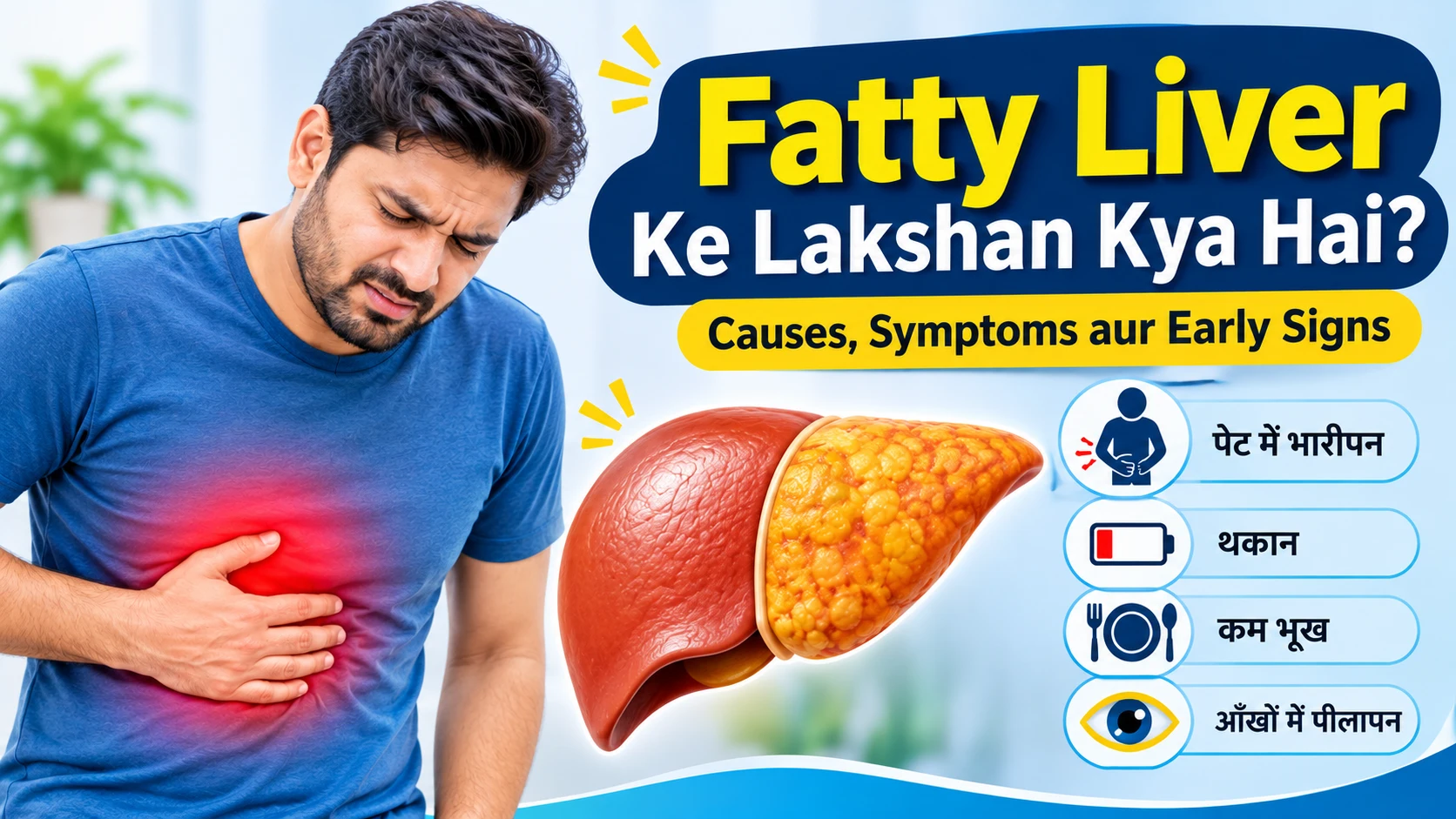
Fatty liver symptoms are often very mild, and in the early stages many people have none at all. When symptoms do appear, they commonly include tiredness, a feeling of fullness or mild discomfort in the upper right side of the abdomen, bloating and reduced appetite. Because these signs resemble many other problems, they are easy to ignore.
In this guide, we explain why fatty liver happens, which early signs to look for, how it is diagnosed and when you should see a doctor. If you want a basic introduction first, read our overview, Fatty Liver Kya Hota Hai?
What Is Fatty Liver and How Does It Develop?
Fatty liver means excess fat has built up in the liver. A healthy liver contains a small amount of fat, but when fat makes up more than about 5% of the liver’s weight, it is considered fatty liver.
How does it develop?
- Extra calories, especially from sugary and oily foods, reach the liver.
- If the body does not respond well to insulin (insulin resistance), the liver produces and stores more fat.
- Fat collects inside liver cells.
- Over time, inflammation can develop and increase the risk of liver damage.
There are two main types: non-alcoholic fatty liver disease (NAFLD, now also called MASLD) and alcohol-related fatty liver. You can read more about the first type in our guide to Non-Alcoholic Fatty Liver Disease.
What Causes Fatty Liver?
Fatty liver usually has more than one cause:
1. Overweight and belly fat
Extra weight, especially around the abdomen, is one of the strongest risk factors.
2. Diabetes and pre-diabetes
High blood sugar and insulin resistance are closely linked to fatty liver. Learn more about the early signs of diabetes.
3. High cholesterol and triglycerides
Excess fat in the blood can also build up in the liver.
4. Unhealthy diet
Sugary drinks, sweets, refined flour, bakery items, fried and packaged foods.
5. Low physical activity
Sitting for most of the day and not exercising.
6. Heavy alcohol use
Long-term, excessive drinking can cause fat buildup and liver damage.
7. Other factors
PCOS, thyroid problems, rapid weight loss, certain medicines and family history can also play a role.
Important: people who are not overweight can also develop fatty liver, especially if they have diabetes, an unhealthy diet or excess abdominal fat.
What Are the Early Symptoms of Fatty Liver?
Early signs are usually mild and easy to mistake for something else:
- Constant tiredness or weakness
- Fullness or mild discomfort in the upper right abdomen
- Bloating or gas
- Reduced appetite
- Unexplained weight gain, especially around the abdomen
- Feeling heavy after meals
- Difficulty concentrating or “brain fog”
For other warning signs related to the stomach and digestion, read our guide on digestive health warning signs.
Please note: These symptoms also occur in acidity, thyroid disorders and many other conditions. Do not diagnose yourself based on symptoms alone.
Can You Have Fatty Liver Without Symptoms?
Yes, very commonly. This is why fatty liver is often called a “silent disease.” Most people in the early stage have no symptoms and find out only when an ultrasound or blood test is done for another reason.
You may want to get checked even without symptoms if you:
- Have diabetes or pre-diabetes
- Are overweight or have a large waistline
- Have high cholesterol or triglycerides
- Have a family history of liver disease or diabetes
- Drink alcohol regularly
Symptoms of Advanced Fatty Liver
If fatty liver continues untreated for a long time, inflammation and scarring may develop. Signs can then include:
- Yellowing of the eyes or skin (jaundice)
- Dark yellow or brown urine
- Fluid buildup in the abdomen or marked swelling of the belly
- Swelling in the legs and ankles
- Severe fatigue and unexplained weight loss
- Itchy skin
- Easy bruising or bleeding
- Vomiting blood or black stools
If you notice any of these signs, see a doctor promptly.
How Is Fatty Liver Diagnosed?
Symptoms alone cannot confirm fatty liver. A doctor may recommend:
- Abdominal ultrasound: shows fat in the liver. Reports often describe Grade 1, 2 or 3. Read more about Grade 1 fatty liver.
- Liver function test (LFT): checks enzymes such as SGOT and SGPT.
- Lipid profile: cholesterol and triglycerides.
- Blood sugar and HbA1c: to check for diabetes.
- FibroScan: measures liver stiffness and fat where available.
You can learn about our ultrasound center and lab tests and diagnostic center for these tests.
Important: A normal LFT does not rule out fatty liver. Many people have normal liver enzymes but still show fat on ultrasound.
What Happens If Fatty Liver Is Ignored?
In the early stage, fatty liver can often be controlled. If ignored, it may progress:
- Simple fatty liver can lead to liver inflammation (NASH/MASH).
- Inflammation can lead to fibrosis (scarring).
- Scarring can lead to cirrhosis.
- In some cases, there is a risk of liver failure or liver cancer.
- Fatty liver is also linked with a higher risk of heart disease.
For most people the disease progresses slowly, which is why early testing and lifestyle changes matter.
When Should You See a Doctor?
See a doctor if:
- An ultrasound or blood test shows fatty liver or raised liver enzymes
- You have ongoing tiredness, abdominal discomfort or bloating
- You have diabetes, obesity, high cholesterol or a thyroid problem
- Your eyes or skin turn yellow
- You notice swelling in the abdomen or legs
- Your urine becomes very dark
If you live in or near Rohru, you can read about Fatty Liver Treatment in Rohru or book an appointment. You can also learn about Dr. Roohail Sharma.
How Can You Lower Your Risk of Fatty Liver?
In the early stage, these steps can help:
- Lose weight gradually
- Exercise for at least 30 minutes most days
- Reduce sweets, sugary drinks, refined flour and fried food
- Stop or limit alcohol
- Keep diabetes, cholesterol and blood pressure under control
- Avoid “liver detox” supplements unless your doctor advises them
For more guidance, read Top Lifestyle Habits for a Healthy Stomach and Liver, Reverse Fatty Liver Naturally and Best Foods for Maintaining a Healthy Liver.
Frequently Asked Questions
Tiredness, fullness or discomfort in the upper right abdomen, bloating and reduced appetite. Many people have no symptoms in the early stage.
Obesity, diabetes, high cholesterol, an unhealthy diet, low physical activity and heavy alcohol use are common causes.
When the liver receives more calories and sugar than it can process, and the body does not use insulin well, fat builds up inside liver cells.
Usually not. Some people feel mild discomfort or fullness in the upper right abdomen.
Symptoms improve when the underlying causes are addressed, such as through weight loss, diet and exercise. Waiting alone usually does not help.
Medical disclaimer: This article is for information only and is not a substitute for professional medical advice. Please consult a qualified doctor for diagnosis and treatment.