
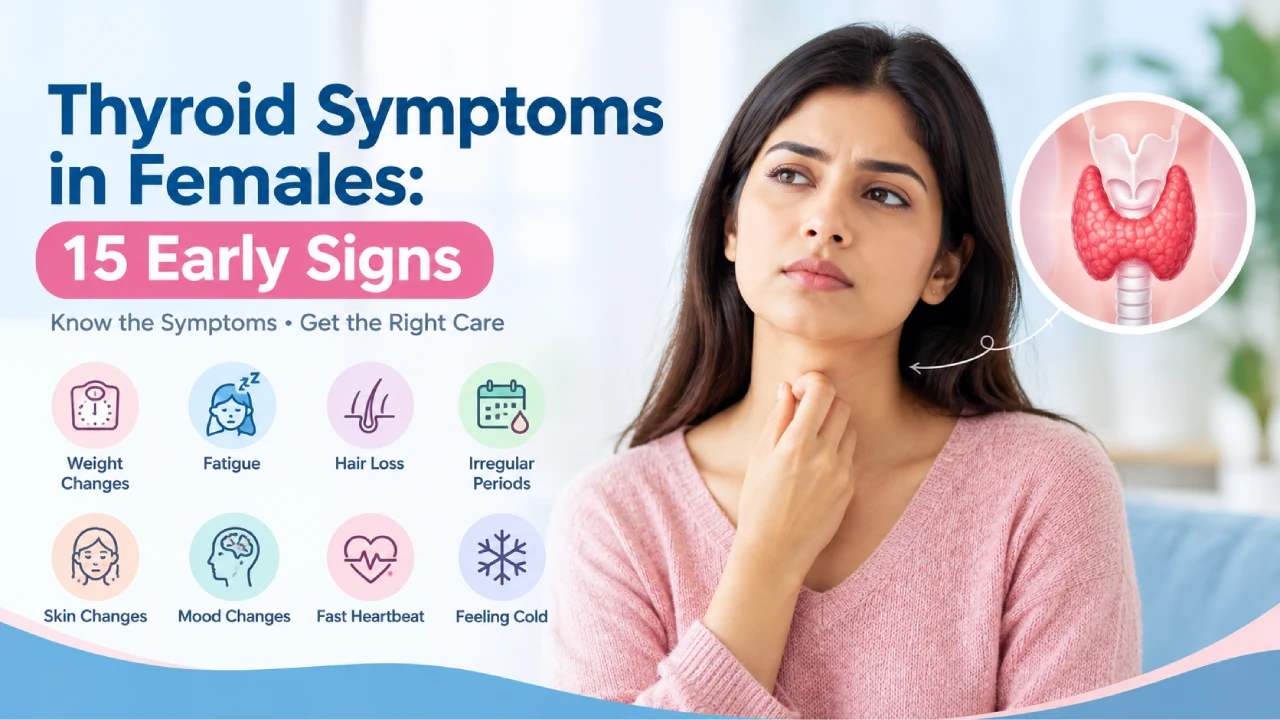
The thyroid is a small, butterfly-shaped gland at the front of your neck. Though it is small, it helps control your metabolism, energy levels, heart rate, body temperature and mood. Thyroid problems are more common in women than in men, and hormonal stages such as periods, pregnancy and menopause can make the effects more noticeable.
Thyroid symptoms in females are easy to overlook. Tiredness is blamed on a busy schedule, hair fall on the weather, and weight gain on age. As a result, many women go months or even years without being tested.
In this guide, we explain the early signs of thyroid problems, the difference between an underactive and an overactive thyroid, the tests used for diagnosis, and when to see a doctor. For a broader overview, you can also read our thyroid problems in women symptoms guide.
What Are the Early Symptoms of Thyroid Problems in Females?
The thyroid can produce too little hormone (hypothyroidism) or too much (hyperthyroidism). The symptoms can differ, but some early signs are common to both:
1. Unexplained weight gain or weight loss Gaining weight without eating more, or losing weight without trying, is one of the most common signs.
2. Constant tiredness and weakness Feeling exhausted even after a full night’s sleep.
3. Hair loss and dry skin Thinning or excessive hair fall, rough or dry skin and brittle nails.
4. Mood changes and difficulty concentrating Irritability, low mood, anxiety, forgetfulness or “brain fog”.
5. Irregular menstrual periods Periods that are late, very heavy, very light or missed.
15 Early Signs of Thyroid Problems in Women: Quick List
| # | Signs & Symptoms | More Common In |
|---|---|---|
| 01 | Unexplained weight gain | Hypothyroidism |
| 02 | Unexplained weight loss | Hyperthyroidism |
| 03 | Persistent tiredness | Both |
| 04 | Hair thinning or hair fall | Both |
| 05 | Dry, rough skin | Hypothyroidism |
| 06 | Feeling cold all the time | Hypothyroidism |
| 07 | Heat intolerance and excess sweating | Hyperthyroidism |
| 08 | Constipation | Hypothyroidism |
| 09 | Frequent loose stools | Hyperthyroidism |
| 10 | Fast or pounding heartbeat | Hyperthyroidism |
| 11 | Anxiety and hand tremors | Hyperthyroidism |
| 12 | Low mood or depression | Hypothyroidism |
| 13 | Trouble sleeping | Hyperthyroidism (sometimes hypothyroidism) |
| 14 | Changes in periods | Both |
| 15 | Swelling or lump in the neck (goitre) | Both |
Having one or two of these symptoms does not mean you have a thyroid problem. Many of them also occur in other conditions, so proper testing is important.
Symptoms of Hypothyroidism in Women (Underactive Thyroid)
In hypothyroidism, the thyroid gland produces too little hormone and the body’s metabolism slows down.
Common symptoms include:
- Feeling cold when others feel comfortable
- Constipation
- Weight gain and fatigue
- Heavy or prolonged periods
- Hair thinning and dry skin
- Puffiness of the face
- A hoarse or deeper voice
- Muscle aches, joint pain and stiffness
- A slow heart rate
- Poor memory, low concentration and low mood
For more detail, read our guide to hypothyroidism (underactive thyroid) symptoms in women. If you also have joint pain, you can learn about our joint pain treatment services.
Symptoms of Hyperthyroidism in Women (Overactive Thyroid)
In hyperthyroidism, the thyroid gland produces too much hormone and the body’s metabolism speeds up.
Common symptoms include:
- Fast or irregular heartbeat (palpitations)
- Excessive sweating and heat intolerance
- Anxiety, restlessness and trembling hands
- Difficulty sleeping
- Weight loss despite a normal or increased appetite
- More frequent bowel movements
- Lighter or irregular periods
- Muscle weakness, especially in the thighs and upper arms
- In some cases, bulging eyes (seen in Graves’ disease)
To learn more, read about hyperthyroidism symptoms in women.
Can Thyroid Problems Affect Periods and Fertility?
Yes. Thyroid hormones directly influence the menstrual cycle and ovulation.
Effects on periods:
- Hypothyroidism may cause heavy, prolonged or more frequent periods, or sometimes delayed periods.
- Hyperthyroidism may cause light, infrequent or irregular periods.
Effects on fertility and pregnancy:
- Thyroid imbalance can affect ovulation, which may make it harder to conceive.
- Poorly controlled thyroid disease during pregnancy can increase risks for both mother and baby.
- Women planning a pregnancy, or who are already pregnant, should ask their doctor about thyroid testing.
For scans during pregnancy, you can learn about our pregnancy ultrasound service.
What Causes Thyroid Problems in Females?
1. Autoimmune thyroid conditions The most common cause is when the immune system attacks the thyroid gland.
- Hashimoto’s thyroiditis is the most common cause of hypothyroidism.
- Graves’ disease is the most common cause of hyperthyroidism.
2. Family history and other risk factors
- A family history of thyroid disease
- Being female, especially after the age of 30 to 35
- The period after pregnancy (postpartum thyroiditis)
- Menopause
- Type 1 diabetes or other autoimmune conditions
3. Iodine imbalance and other medical causes
- Too little or too much iodine
- Thyroid nodules or goitre
- Previous thyroid surgery or radiation treatment
- Certain medicines that affect thyroid function
Do not take iodine supplements or thyroid medicines without a doctor’s advice.
Which Tests Diagnose Thyroid Problems?
1. TSH test (usually the first test) TSH is a hormone released by the brain that signals the thyroid to work. It is usually high in hypothyroidism and low in hyperthyroidism.
2. Free T4 test This measures the level of thyroid hormone circulating in the blood.
3. Additional tests when medically indicated
- Free T3
- Anti-TPO antibodies, to check for autoimmune thyroid disease
- Thyroid ultrasound, for swelling or nodules
- In some cases, a thyroid scan or FNAC
Your doctor is the best person to interpret your report, because normal ranges can vary between laboratories and individual situations. You can learn about our lab tests and diagnostic services here.
How Are Thyroid Problems Treated?
Treatment depends on whether the thyroid is underactive or overactive, and on the underlying cause.
Underactive thyroid (hypothyroidism):
- Most patients are given a thyroid hormone replacement tablet.
- The dose is set according to blood tests and adjusted over time.
- Never stop or change the dose without medical advice.
Overactive thyroid (hyperthyroidism):
- Doctors may prescribe anti-thyroid medicines.
- Radioactive iodine treatment or surgery may be considered if needed.
- Separate medicines may be used to control symptoms such as a rapid heartbeat or tremors.
Why does treatment depend on the diagnosis? The two conditions need opposite treatments. The wrong medicine, or treatment without testing, can make the problem worse. That is why self-treatment is not advised.
A healthy diet, regular exercise, good sleep and stress management also support overall health. You can learn more about thyroid care at our clinic here: Thyroid Treatment in Rohru.
When Should You See a Doctor?
See a doctor if:
- Fatigue, weight change or hair loss lasts for more than a few weeks
- Your periods become very irregular, very heavy or stop
- You notice swelling or a lump in the neck, or have difficulty swallowing
- Your heartbeat feels very fast or irregular
- You are planning a pregnancy or are pregnant
- You have a family history of thyroid disease
- You already take thyroid medicine but your symptoms continue
Seek urgent medical help if you have chest pain, breathlessness, fainting or a very rapid heartbeat.
You can book an appointment here or learn about Dr. Roohail Sharma. If you are unsure how to pick a doctor, read How to Choose the Best Doctor in Rohru.
Frequently Asked Questions
Common early signs include persistent tiredness, unexplained weight changes, hair fall, mood changes and changes in periods. These can also occur in other conditions, so a blood test is needed to confirm.
Yes. Both an underactive and an overactive thyroid can cause thinning or excessive hair fall. Once the thyroid is controlled, hair often improves over a few months.
Yes. An underactive thyroid slows metabolism and can lead to weight gain. However, weight gain alone should not automatically be blamed on the thyroid.
Yes. Hypothyroidism can cause heavy or prolonged periods, while hyperthyroidism can cause light or irregular periods.
The first test is usually TSH. Free T4 is often added, and Free T3 or Anti-TPO may be advised when needed.
Some types, such as temporary thyroiditis, may resolve with or without treatment. In many permanent cases, medicines keep the thyroid under control and most women can lead a normal life.
A general physician or an endocrinologist. You can begin with your general doctor for initial testing and treatment.
Medical disclaimer: This article is for information only and is not a substitute for professional medical advice. Please consult a qualified doctor for diagnosis and treatment of thyroid problems.